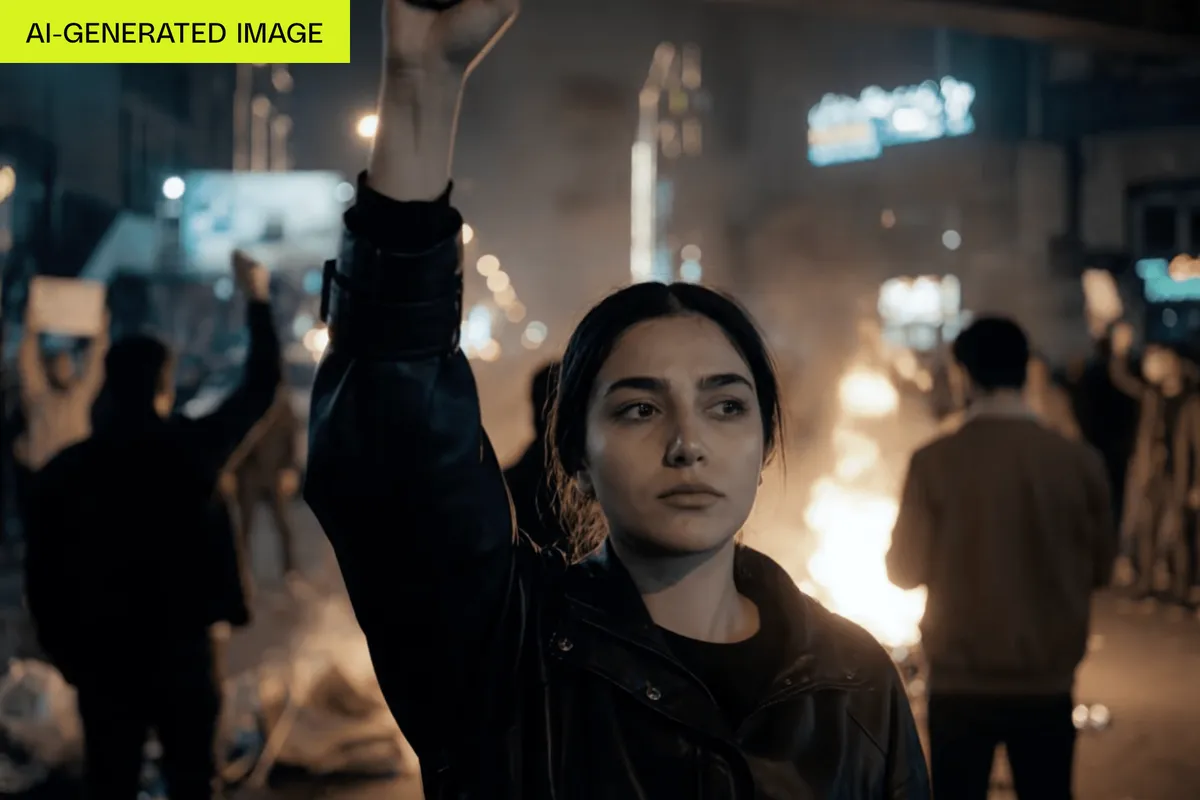
Here's a sentence that would have sounded completely unhinged five years ago: a fully AI-generated, 75-minute dramatic film made for two thousand dollars is premiering at one of the most prestigious film festivals in the world. And yet, here we are.
Dreams of Violets is heading to next month's Tribeca Festival, and it's not some tech bro vanity project. The film is a fictional dramatization of the Iranian government's mass killing of protesters - a subject that is both politically urgent and, for obvious reasons, nearly impossible to document through traditional filmmaking.

Why AI actually makes sense here
This is the part where the story gets genuinely interesting rather than just gimmicky. The film was created by directors Ash and Pooya Koosha, and according to a press release cited by The Verge (which sourced The Hollywood Reporter's earlier coverage), it is "based on journalistic reports, photographs, and eyewitness accounts." Every person and image you see on screen was generated by AI.
Think about what that actually means in context. You cannot send a film crew into Iran to dramatize state-sanctioned violence against protesters. You cannot put real faces on screen without putting real people at risk. AI isn't just a cost-cutting shortcut here - it's arguably the only tool that makes this specific story filmable at all.

The $2,000 elephant in the room
Yes, the budget is absurdly low. Yes, the entire film industry is currently having a collective existential crisis about exactly this kind of thing. Both of those facts can be true simultaneously.
What Dreams of Violets does is force a genuinely uncomfortable question onto the festival circuit: if a story is important enough, and the technology is good enough, does the method of production actually matter? Tribeca apparently thinks it's at least worth asking.

The film sits at a strange and fascinating crossroads - between journalism and cinema, between documentary impulse and fictional form, between human rights advocacy and the most controversial technology in the creative industries right now. It's the kind of project that makes everyone slightly uncomfortable for completely different reasons, which is usually a sign that something worth watching is happening.
Whether Dreams of Violets is a glimpse of cinema's future or a one-off exception that proves a very specific rule, its Tribeca slot guarantees the conversation is going to get loud.