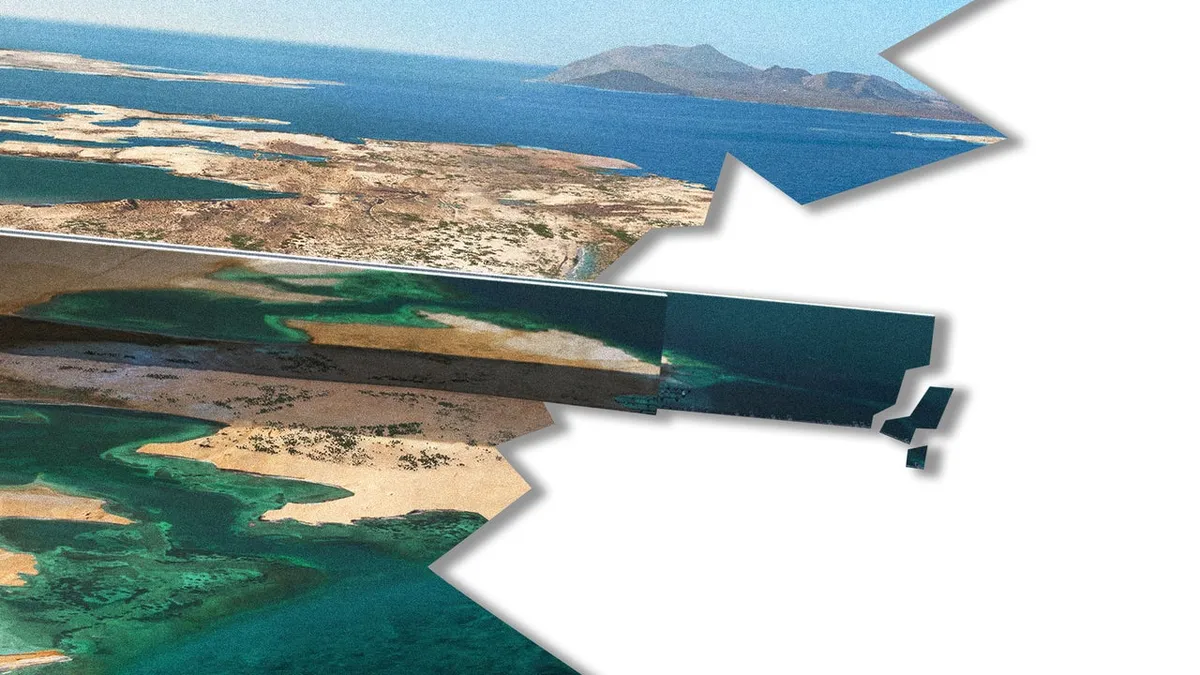
The Line, Saudi Arabia's audacious plan to build a 170-kilometer mirrored city slicing through the desert like the world's most expensive butter knife, has been halted. Construction is paused until 2030, according to Fast Company, and at this point the only thing surprising is that anyone is surprised.
What even was The Line?
For the uninitiated: The Line was the crown jewel of Saudi Arabia's NEOM megaproject. It was supposed to house nine million people inside a single, straight-line structure - no roads, no cars, just vibes and conveyor belts or something. The renderings were genuinely breathtaking. Two mirrored walls cutting through the Arabian desert like a lost prop from a Ridley Scott film. It looked incredible. It looked utterly, cosmically unhinged.
Architecture critics, urban planners, and basically anyone who has ever played SimCity for more than 20 minutes raised their hands almost immediately. You cannot stack nine million people in a linear tube and expect functional economics, supply chains, emergency services, or frankly, human psychology to just... cooperate. But the renders were so shiny.
How it actually went
The project followed a timeline that reads like a masterclass in expectation mismanagement. Grand announcements. Soaring promises. Then quietly, gradually, the numbers started shrinking. The population targets dropped. The construction scope contracted. The delivery dates slid. Now the whole thing is on ice until at least 2030, which in megaproject language roughly translates to "we will revisit this when everyone has forgotten how confidently we promised otherwise."
Multiple delays and successive downsizings preceded this halt, per Fast Company's reporting - a pattern that, in hindsight, was less a series of setbacks and more a slow-motion correction toward reality.
Why this matters beyond the schadenfreude
Look, it is genuinely easy - and fun - to dunk on The Line. The hubris was staggering. But underneath the spectacle is a real story about what happens when nation-scale PR campaigns get mistaken for urban planning. Billions of dollars and years of labor went into something that was, at its core, a rendering.
There are real workers, real engineers, and real communities affected by the project's collapse. That deserves acknowledgment even while we are busy bookmarking the original concept video to show people at dinner parties.
The Line will likely become a case study in architectural overreach for generations of students. Which, honestly, is a more lasting legacy than a 170-kilometer mirror in the desert ever would have been.