Most of us, confronted with a crumbling old shed in the Japanese countryside, would probably just... call someone to haul it away. Maybe post a sad photo on Instagram. Move on with our lives.
Not Go Izumita. The artist looked at a decaying rural structure and saw something else entirely - a megalith waiting to happen.

Memory, but make it monumental
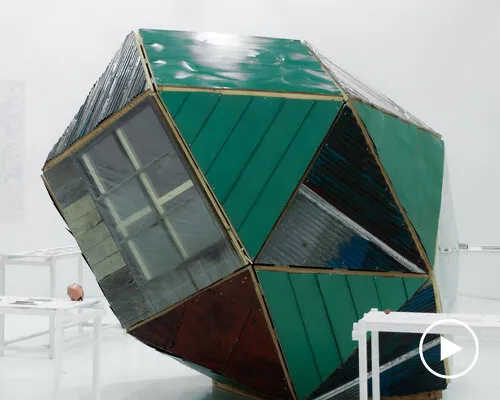
The project, dubbed Disassembly and Memory, takes the physical material of an abandoned agricultural shed and transforms it into a dense, towering sculptural form that reads almost like something ancient. Like a standing stone. Like Stonehenge's less famous but equally brooding cousin who moved to rural Japan and got really into wabi-sabi.
According to designboom, the work is explicitly about extending architectural memory into a new material form. The shed doesn't get demolished - it gets translated. The bones of a utilitarian structure become something that feels prehistoric and permanent, even though it is, technically, a reimagined farm shed from the recent past.
Which is kind of the whole point, right?
Why this actually matters
Rural Japan has a well-documented problem with abandoned structures. As populations shift toward urban centers and older generations pass on, the countryside is quietly filling up with ghost buildings - sheds, farmhouses, entire villages left to slowly dissolve back into the landscape. It's a phenomenon called akiya, and it's equal parts heartbreaking and fascinating.
What Izumita is doing here isn't just making cool art (though it is very cool art). It's proposing a different relationship with the architecture of forgetting. Instead of erasure, there's transformation. Instead of a demolition crew, there's a sculptor working with what was already there - honoring the weight and presence of a structure that served a community, even if that community has scattered.
The resulting form, dense and gravity-defying in its compression of material, genuinely does evoke megaliths. There's something primal about it. Something that tricks your brain into thinking it belongs to a much older story than it actually does.
The art world's best magic trick
There's a long tradition of artists finding the monumental in the mundane - but this feels particularly well-executed because the material logic is so tight. The shed becomes a sculpture because of its history, not in spite of it. The memory is literally built into the form.
In a world that tends to flatten everything old into content or clear it away for something shiny and new, Disassembly and Memory is a quiet, strange, and genuinely moving argument for a third option.
Leave the shed. Just make it eternal.