Google just called its new AI-powered search box "the biggest upgrade to our Search box in over 25 years." Bold claim. Bolder move. Because the week after that announcement, a meaningful chunk of users apparently looked at all that Gemini-flavored intelligence and said: hard pass.
According to Fast Company, DuckDuckGo - the privacy-focused Google alternative you probably have a "I should use this more" relationship with - announced a double-digit surge in U.S. installs in the week following Google's big I/O developer conference reveal on May 19. That's not a coincidence. That's a protest vote.
The AI backlash nobody expected (but everyone should have)
Google unveiled what it's calling "AI Mode" at I/O - a Gemini 3.5 Flash-powered search experience complete with information agents and follow-up question prompts. It sounds impressive, and for plenty of people it probably is. But for a growing segment of users, this is the nightmare scenario: an AI standing between them and the actual internet, confidently summarizing things it may or may not have made up.
Hallucinations. Privacy concerns. The general vibe of being gently herded into an AI-shaped funnel every time you just want to look something up. These are the reasons people are bolting.
DuckDuckGo's "No AI" function is doing the heavy lifting here
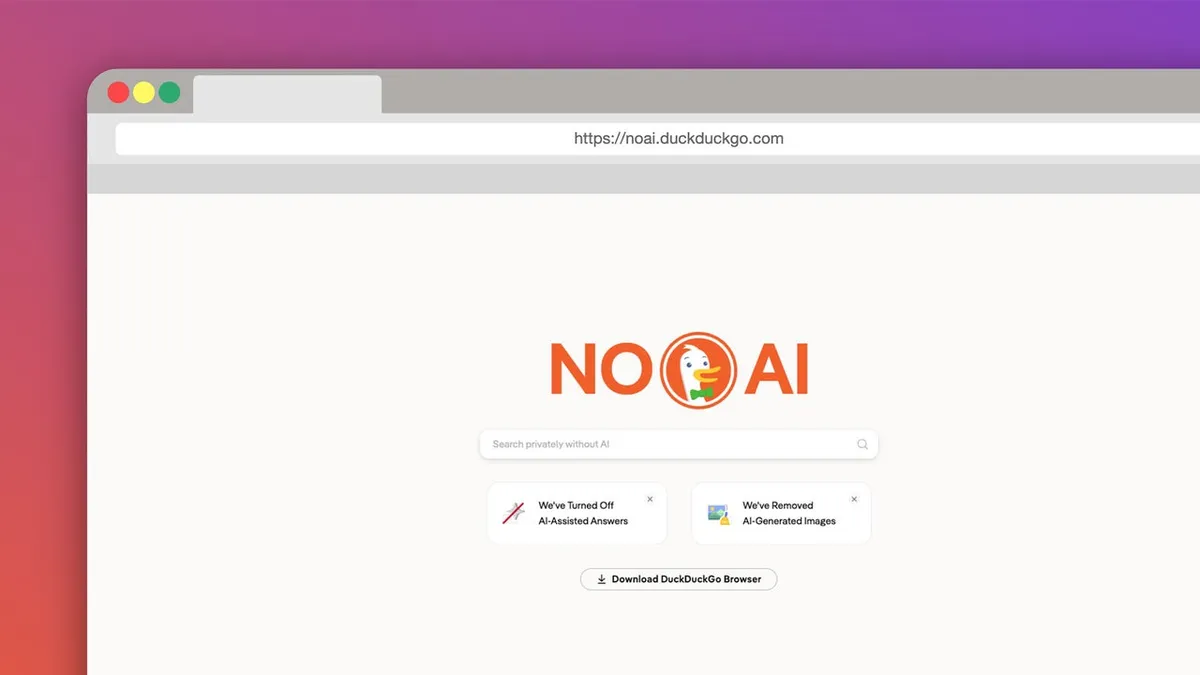
DuckDuckGo has been quietly positioning itself as the anti-AI search option, and its timing could not be better. The platform offers users the ability to get results without AI-generated summaries interfering - a feature that's starting to sound less like a niche preference and more like a basic human right.
There is something almost poetic about a search engine gaining traction specifically because it promises to do less. In an industry obsessed with adding features, "we won't shove an AI in your face" is apparently a competitive advantage now.
What this actually means
This isn't necessarily the beginning of the end for Google - let's not get dramatic. But it is a signal that the rush to AI-ify everything is creating real friction with real users. When people voluntarily switch search engines - one of the stickiest habits in all of tech - something has genuinely irritated them.
Double-digit install growth in a single week is not nothing. It's the market whispering that maybe, just maybe, the option to get old-fashioned search results without an AI narrator should not be a premium feature.