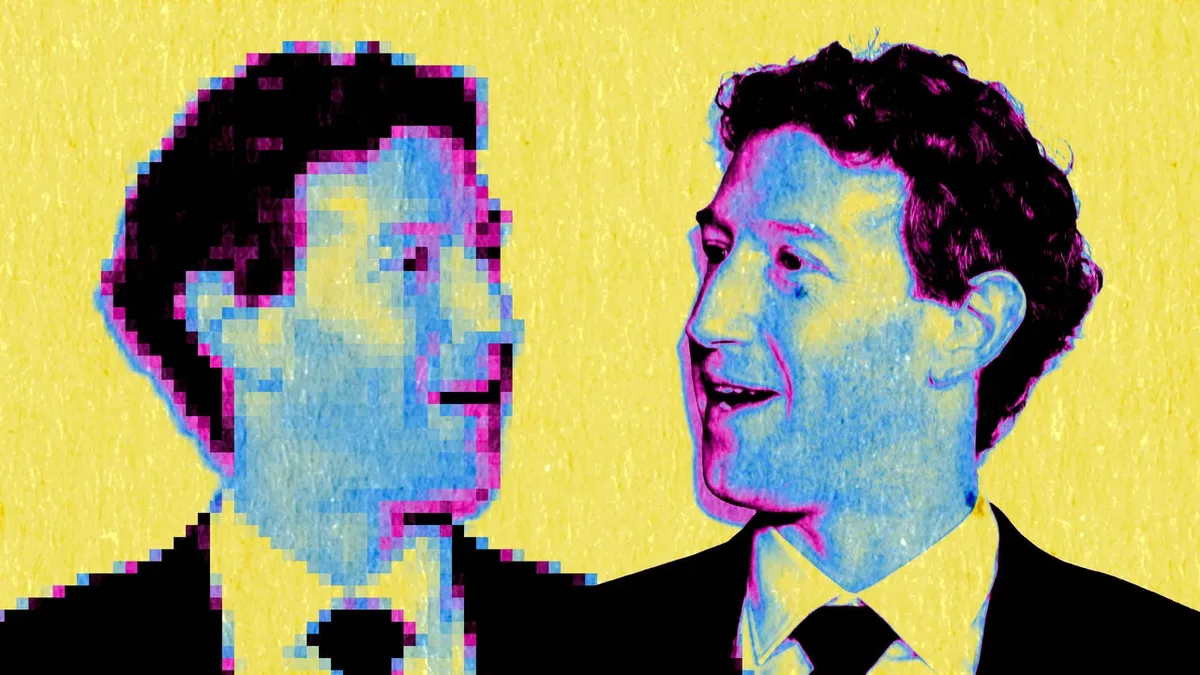
You know that long-running joke about Mark Zuckerberg secretly being a robot? It just got a lot less funny - and a lot more interesting.
According to a report by the Financial Times, Meta is developing a photorealistic, AI-powered 3D version of its CEO that employees will actually be able to interact with. The bot is reportedly being trained on Zuckerberg's image, mannerisms, tone, speaking style, and public statements - essentially an attempt to bottle up the full Zuck experience and make it available on demand.
Why this is a bigger deal than it sounds
On the surface, this reads like a quirky tech-world flex. But think about what it actually means. If a senior leader can deploy a convincing AI version of themselves to give feedback, answer questions, or communicate company direction, it changes the nature of leadership in organizations - especially sprawling ones like Meta, which employs tens of thousands of people worldwide.
For employees, the appeal is obvious. Getting direct input from the CEO is normally a privilege reserved for the few. An AI model trained on his thinking could, in theory, democratize that access. That sounds genuinely useful.
But there are real questions worth asking here. How do you know when you're getting authentic Zuckerberg versus a confident-sounding approximation? And what happens when the AI-Zuck says something the real Zuck wouldn't stand behind?
Zuckerberg is reportedly involved directly
Fast Company notes that Zuckerberg himself is directly involved in the project, which suggests this isn't just an internal experiment being run without his buy-in. That level of personal investment makes sense - if you're going to train an AI on someone's identity, it probably helps to have that person in the room.
It also fits neatly into Meta's broader AI ambitions. The company has been pushing hard into AI across its platforms, and building a CEO avatar is, in a strange way, a high-profile proof of concept for what the technology can do.
The bigger picture
Whether or not you find this unsettling - and plenty of people will - it signals something real about where corporate culture is heading. AI versions of public figures and executives aren't a distant sci-fi scenario anymore. They're being built right now, inside some of the world's biggest companies.
For the rest of us watching from the outside, it raises a genuinely fascinating question: if your boss had an AI clone, would you actually want to talk to it?