For years, YouTube's approach to labeling AI-generated content has been roughly equivalent to hiding a warning label inside a cereal box - technically there, completely useless. Well, consider the era of performative transparency officially over.
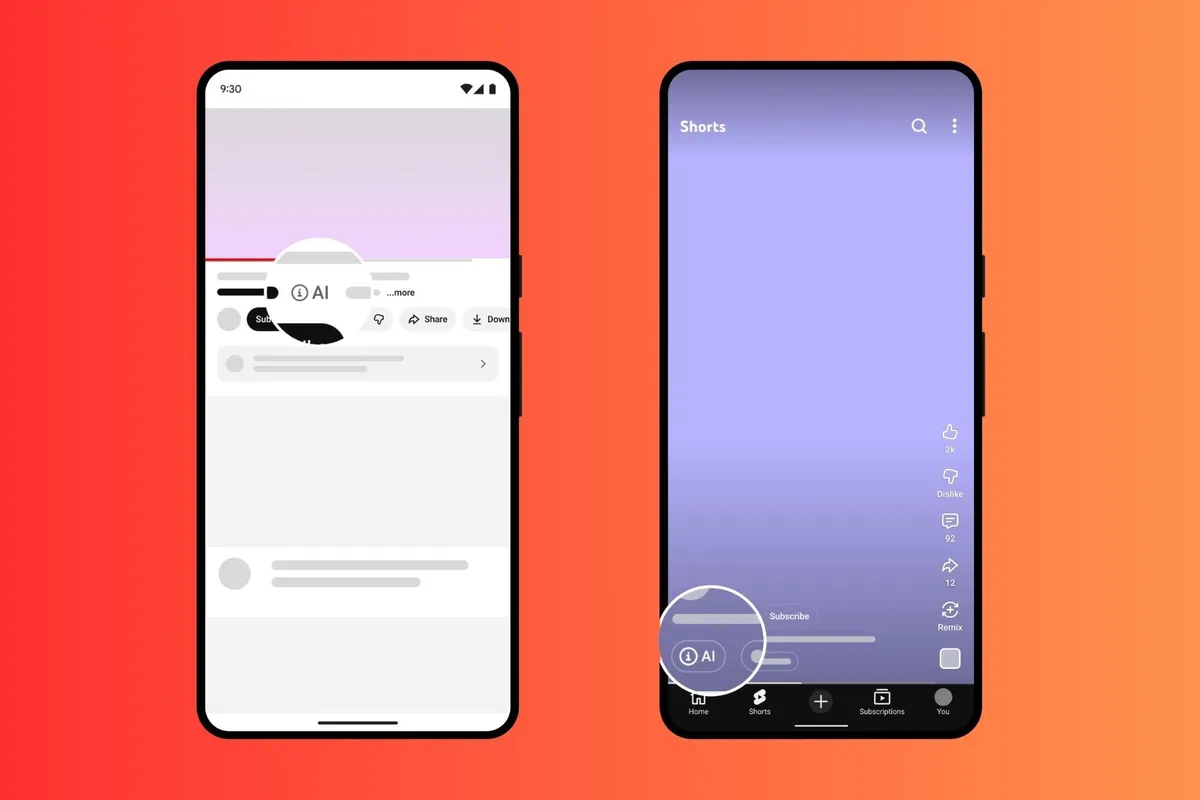
YouTube has announced a proper overhaul of how it handles AI disclosures, and this time it sounds like they actually mean it. According to The Verge, the platform is moving AI labels to places human eyeballs naturally go, and - brace yourself - the labels will now literally say "AI" on them. Revolutionary stuff.

So what's actually changing?
For regular long-form videos, a label containing the letters "AI" will now appear in a visible location on the video itself, rather than buried somewhere in the expanded description that approximately nobody reads. Shorts are getting the same treatment, with disclosures repositioned to be far more prominent than before.
On top of the manual disclosure system getting a glow-up, YouTube is also rolling out automatic identification of AI-generated content. This means the platform won't just be relying on creators to self-report anymore - it'll be doing some of the detective work itself.

Why this actually matters
This isn't just a UI tweak. The stakes here are genuinely high. AI-generated video has gotten frighteningly good, frighteningly fast. Synthetic faces, cloned voices, fabricated footage of real people - all of it is already floating around the internet, and a lot of it ends up on YouTube.
A label that nobody sees is the same as no label at all. If viewers can't quickly tell whether what they're watching was touched by generative AI, they can't make informed decisions about what they're consuming. That's a problem whether you're watching a cooking tutorial, a news recap, or a video of a politician supposedly saying something they never said.

The move also fits neatly into Google's broader push around AI verification following its I/O announcements. YouTube isn't operating in a vacuum here - there's clearly a company-wide effort to get ahead of the AI content wave before regulators do it for them.
The catch
Automatic detection is only as good as the models doing the detecting, and AI-generated content is notoriously slippery to identify with perfect accuracy. False positives and missed labels are almost certainly going to happen. But an imperfect system that's visible and improving beats an invisible one every single time.
It's a modest step, honestly. But in a media landscape that's increasingly difficult to read at face value, "you can now tell what's AI-generated" is not a nothing update. It's table stakes - and YouTube is finally pulling up a chair.