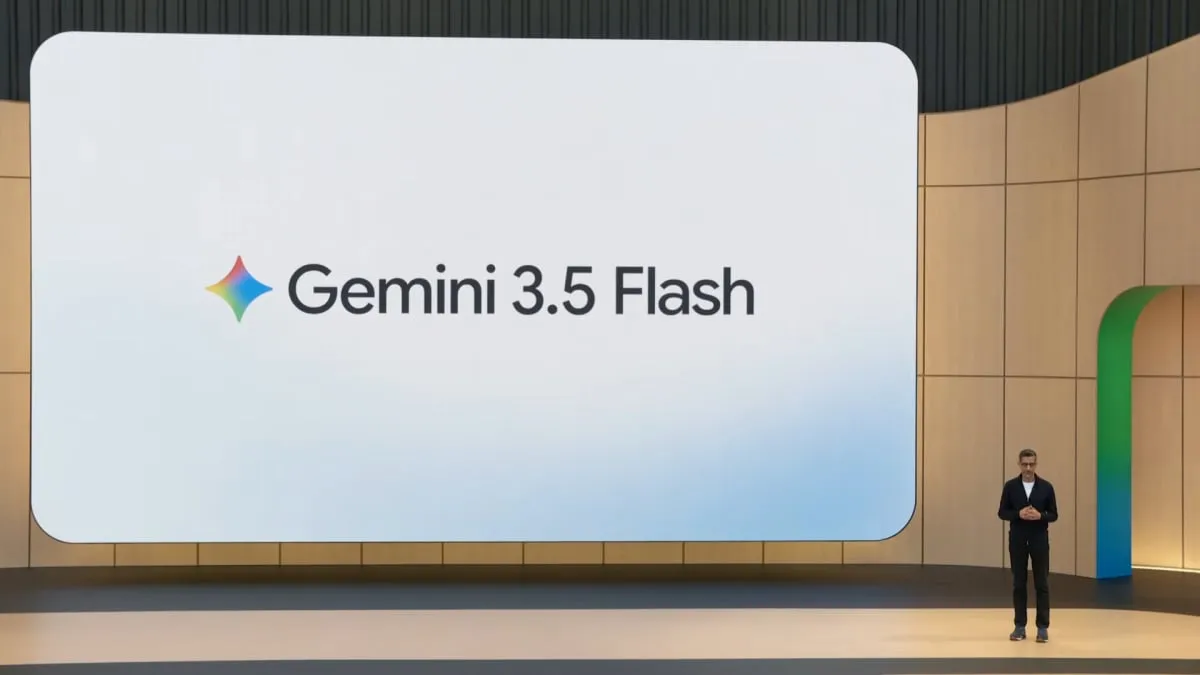
Google has quietly done something that should either excite you or make you spiral into an existential crisis depending on your relationship with productivity - it released Gemini 2.5 Flash, a new frontier model built specifically around agentic AI.
So what does "agentic" actually mean? In plain English: instead of just answering your questions, this version of Gemini is designed to take actions. We're talking multi-step tasks, autonomous decision-making, and the kind of "I'll handle it" energy your most capable colleague has but never actually delivers on.
Why this is a bigger deal than it sounds
Most AI up to this point has been reactive. You ask, it answers. Impressive, sure, but fundamentally still a very fancy search engine wearing a tuxedo. Agentic AI flips that script. The model can now chain tasks together, interact with tools and systems, and work toward a goal without you holding its hand through every single step.
According to reporting by Lifehacker, the new Gemini 2.5 Flash model is being rolled into Google's core AI products and enterprise offerings - meaning this isn't some niche research demo. This is going into the stuff people actually use at work.
Flash? Isn't that the cheaper one?
Yes, and that's kind of the point. The "Flash" tier in Google's lineup has always been about speed and efficiency rather than raw brainpower. The fact that Google is building agentic capabilities into Flash - not just its heavyweight Gemini Ultra models - signals that they want this stuff to be everywhere, not locked behind expensive enterprise tiers.
Think of it like putting a self-driving mode in a Honda Civic instead of only a Tesla. Wider reach, more disruption, more people suddenly realizing their workflow might need a rethink.
What this means for you, specifically
If you use Google Workspace, Google Cloud, or basically anything with a Google logo on it, agentic features are coming to your world soon. The pitch is automation of repetitive multi-step tasks - the kind of stuff that technically only takes five minutes but somehow eats your entire afternoon.
Is this the moment AI stops being a party trick and starts being genuinely useful infrastructure? Google is clearly betting yes. Whether that future arrives smoothly or in a chaotic blaze of accidentally-sent emails and miscalculated spreadsheets remains to be seen.
Either way, your to-do list has been put on notice.