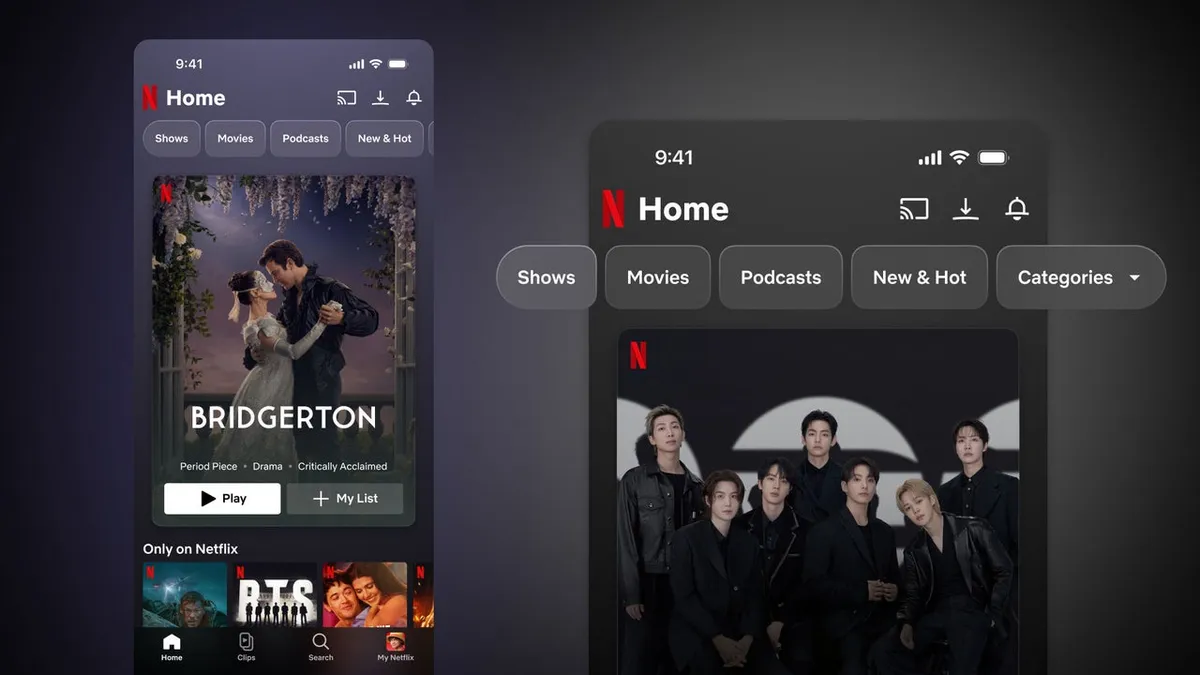
Congratulations, doom-scrollers. You've won. Netflix, the last app on your phone that still required you to hold it horizontally like a civilized person, has officially surrendered to the vertical video era.
Starting April 29, Netflix is rolling out its biggest mobile redesign in years across the U.S., U.K., Canada, and a few other lucky markets. The headline feature is a new "Clips" tab serving up trailers, highlights, and short-form content in a vertical, swipeable feed. If that sounds exactly like TikTok, YouTube Shorts, or Instagram Reels to you - you are correct, and Netflix would like you to stay on the app longer, please.
So what actually changed?
The new interface is built around the idea that your thumb should do all the work. The vertical feed lets users browse content without committing to a full episode, essentially letting you vibe-check a show before investing 45 minutes of your life into it. Revolutionary? No. Smart? Absolutely.
Netflix isn't just copying the short-form format for fun - this is a calculated move to compete for attention on the one screen that matters most right now: your phone. Streaming wars have evolved. It's not just about which service has the best originals anymore; it's about which app can physically hold your eyeballs the longest.
Why this actually matters
Here's the thing people will miss while dunking on Netflix for going full TikTok: discovery on streaming platforms is genuinely broken. How many times have you spent 20 minutes scrolling Netflix's old interface, found nothing, and rewatched The Office again? The clips-based approach might actually solve that. Short previews that autoplay in a feed give you a real sense of a show's tone and energy in a way that a static thumbnail absolutely does not.
The redesign is rolling out globally in the coming months, so if you're outside the initial launch markets, your horizontal Netflix experience is living on borrowed time.
Whether this makes Netflix more addictive or more useful probably depends on your relationship with social media. But one thing is certain - the streaming giant looked at the apps eating its lunch among younger users and decided that if you can't beat them, you might as well swipe up.