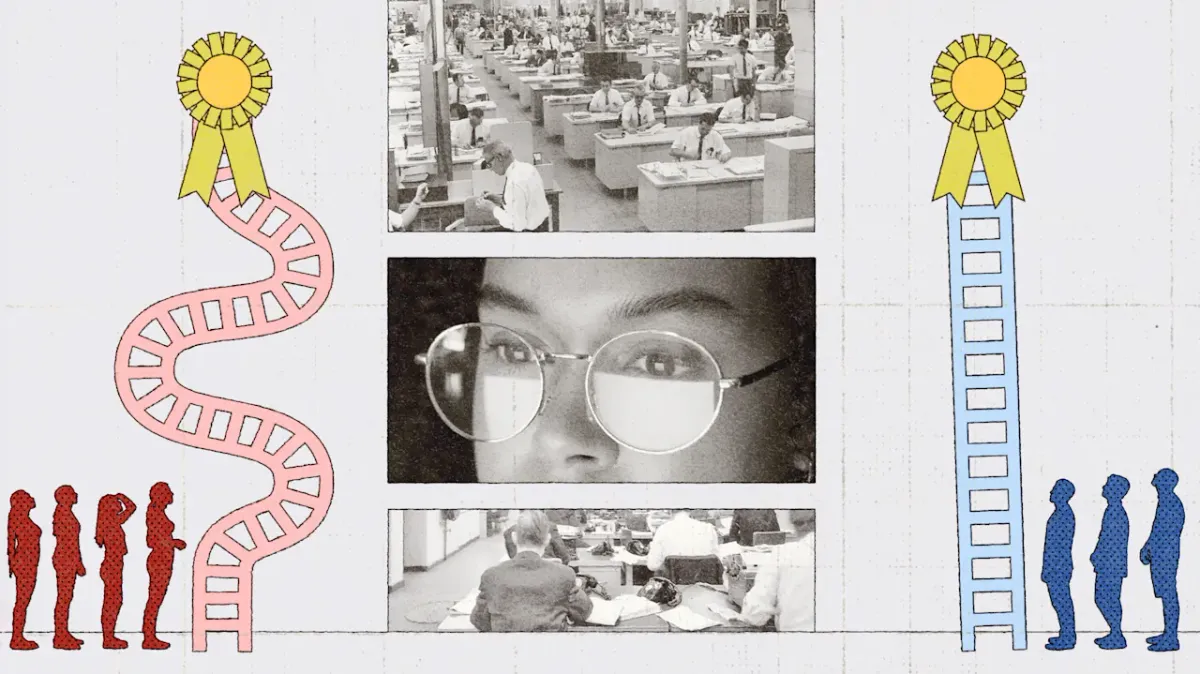
Here's a number worth sitting with: for every dollar a man earns, a full-time working woman takes home 81 cents. That's not ancient history - that's the most recent data from the U.S. Census Bureau. And it's just one piece of a much larger picture that, according to a report from Fast Company, shows work is still fundamentally harder for women than it is for men.
The gap between presence and power
Women make up 47% of the U.S. workforce. They show up, they contribute, they lead teams and projects and entire departments. And yet only 37% of leadership positions in the country are held by women. That's not a minor statistical blip - it's a persistent structural gap between how much women participate in work and how much influence they're actually allowed to hold.
The glass ceiling, a concept that's been discussed for decades, is still very much intact. The frustrating part isn't just that the barrier exists - it's that by now, most of us assumed it would have shattered.
The harassment problem isn't going away
Beyond pay and advancement, women also face a disproportionate burden of workplace harassment. This isn't a fringe issue affecting a small minority - it's a widespread reality that shapes how women navigate their careers every single day. The mental load of managing these dynamics, on top of doing the actual job, is a tax that most men simply don't pay.
Why this still matters - urgently
It can be tempting to feel like gender equity at work is a solved problem, or at least a mostly-solved one. The last decade brought high-profile conversations, corporate diversity pledges, and a cultural reckoning or two. But the data keeps telling a different story.
For younger women entering the workforce today, these aren't abstract statistics - they're the conditions they're walking into. And for women already mid-career, they're the headwinds they've been pushing against for years.
The takeaway from Fast Company's reporting isn't hopelessness - it's a reminder that awareness without structural change doesn't move the needle. Pay equity policies, genuinely diverse hiring panels, and real accountability for harassment aren't nice-to-haves. They're the baseline of a workplace that actually works for everyone.
We're not there yet. And pretending otherwise doesn't help anyone.