Most of us fidget without thinking about it - tapping a finger, twisting a ring, rubbing a thumb across a surface when we're anxious or bored or overwhelmed. It's one of those deeply human habits we've been told to suppress. But what if that restless energy was actually trying to tell us something useful?
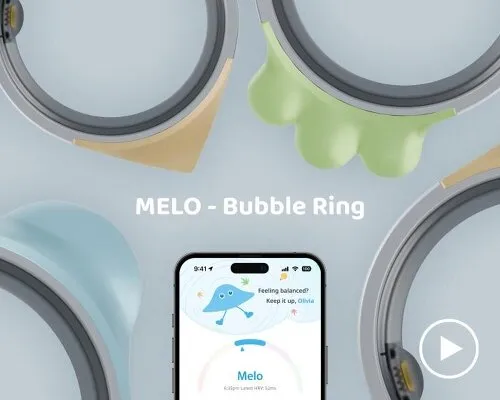
That's the premise behind MELO, a sensor-embedded bubble ring concept that reframes fidgeting not as a nervous tic to be corrected, but as a kind of emotional language worth listening to. As reported by designboom, the wearable turns those small, repetitive physical gestures into real-time emotional data - essentially creating a feedback loop between your body and your awareness of how you're actually feeling.
Why this is more interesting than your average wellness gadget
Wearables that track stress or mood aren't new - smartwatches have been doing versions of this for years through heart rate variability and skin conductance. But MELO takes a different approach by focusing specifically on intentional touch and movement. Rather than passively monitoring your body in the background, it engages with something you're already doing instinctively.
There's something genuinely compelling about that shift in perspective. Fidgeting has long been associated with anxiety or distraction, but research increasingly suggests it can also be self-regulatory - a way the nervous system manages excess energy or emotional load. Designing technology around that behavior rather than against it feels like a more empathetic starting point.
The design matters too
It's worth noting that MELO is also just a nice-looking object. The bubble-like form feels tactile and inviting, which matters a lot for a device that's supposed to be touched constantly. Wearable tech has historically struggled to balance function with aesthetics - nobody wants to feel like they're strapping a medical device to their body. A ring that looks like jewelry but functions like an emotional interface is a much easier sell.
Whether MELO moves beyond concept stage remains to be seen, but it points toward a broader design conversation that's gaining momentum: what does emotionally intelligent technology actually look like? Not just tech that monitors you, but tech that meets you where you are - in this case, quite literally at your fingertips.
If you're someone who's always absent-mindedly spinning their rings anyway, the idea of that habit becoming something meaningful is hard not to find a little appealing.