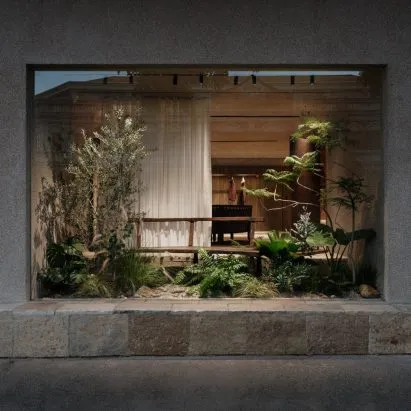
What if going shopping felt less like a fluorescent-lit anxiety spiral and more like wandering through a courtyard garden in ancient China? That's the very specific vibe FOG Architecture was going for with the new MSLAN flagship store in Quanzhou, and honestly, they nailed it.
Reported by Dezeen, the Chinese studio took a corner unit that used to be part of a department store from the 1970s-80s - right next to the Quanzhou Clock Tower, no less - and completely reimagined it as a series of gardens that slow you down on purpose. Yes, on purpose. In 2025. Wild concept.
Ancient houses as a blueprint for buying clothes
FOG Architecture drew inspiration from traditional Quanzhou residential architecture, the kind of courtyard-centered homes that have defined this coastal Fujian city for centuries. The idea is that the store doesn't just sell you clothes - it walks you through a spatial experience that references local heritage while somehow still feeling fresh and contemporary.
Instead of the usual retail logic of cramming as much product as possible into every square meter, the design introduces garden sequences that punctuate the shopping journey. You're not just browsing a rack. You're moving through space, pausing, breathing. It's basically anti-retail retail.
Why this matters beyond the aesthetics
Look, pretty stores are a dime a dozen on Instagram. But what FOG Architecture is doing here is something more interesting - they're making an argument about what physical retail can still offer that online shopping never will. A curated sense of place. A reason to actually leave your house.
The choice to root a fashion brand's flagship in hyper-local architectural tradition is also a quiet but pointed statement. MSLAN is a local brand. Quanzhou is their city. And instead of chasing some generic international luxury store aesthetic, they leaned all the way into where they come from. That's either very confident or very smart - probably both.
The 'slow experience' is the whole point
The term FOG Architecture uses is a "slow experience," which in retail terms is practically revolutionary. We live in a world of one-click checkout and same-day delivery. Building a store that actively asks you to slow down feels almost confrontational - in the best possible way.
If this is what happens when architects take traditional courtyard houses seriously as design inspiration, someone please forward this brief to every mall developer on the planet. We are begging.