Affordable housing that looks like it was meant to be there? In this economy? In New York City? Yes, apparently it's possible, and Dattner Architects just proved it in the Bronx.
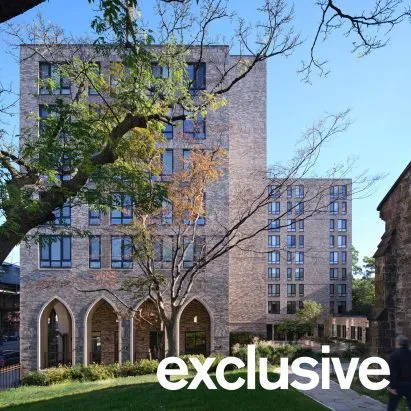
The local studio has completed St James Terrace, a new social housing building tucked right up against a landmarked Episcopal church in the Fordham neighbourhood. And instead of doing the usual thing where a shiny glass box shows up next to a century-old building and everyone pretends it's fine, they actually leaned into the gothic details of the existing church to make the new construction feel like a coherent whole.
Gothic arches but make it affordable housing
According to Dezeen, the project combines affordable housing with supportive spaces in a purpose-built building that bookends the historic church campus. That word - bookends - is doing a lot of work here, and it's the right call. Rather than plopping something new in the middle and disrupting the character of the site, the building anchors one end of the campus while the church holds the other.
The gothic detailing is the real trick. Those pointed arches and ornamental masonry elements that make old Episcopal churches look so dramatically cool? Dattner borrowed from that visual language and threaded it into the new building's facade. The result is a project that reads as contemporary but doesn't scream "we had a deadline and a budget."
Why this actually matters
Here's the thing about historic preservation and affordable housing - they almost never end up in the same sentence unless someone is complaining. Landmarked buildings are notoriously tricky to develop around. Community boards get anxious. Preservationists get anxious. Everyone gets anxious. The path of least resistance is usually to build something blandly inoffensive and call it a day.
What Dattner has done instead is treat the existing church as a design brief rather than an obstacle. The historic fabric of the site isn't just protected, it's actually informing what gets built next to it. That's a harder, smarter approach - and it's the kind of thinking that tends to produce buildings neighbourhoods don't resent in fifteen years.
Fordham already has strong bones as a neighbourhood. A housing project that adds to that character rather than erasing it is genuinely worth getting excited about - even if affordable housing probably shouldn't need to clear the bar of "architecturally interesting" just to deserve to exist.
But hey, when it does clear that bar, we're going to talk about it.