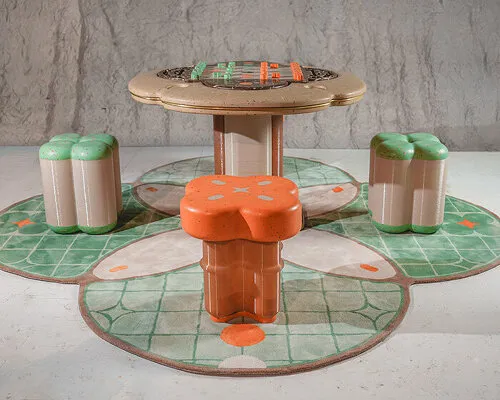
If you've ever wandered the streets of Hong Kong, you know that xiangqi - Chinese chess - is more than a game. It's a gathering ritual, a reason to linger, a way of holding space in the middle of a busy city. Design studio reEDIT has taken that spirit and turned it into something you can actually sit around: a social chess table built from bamboo scraps, milk tea waste, and recycled plastic.
Waste as raw material
The project is as much about materiality as it is about play. Bamboo scaffolding is a defining visual of Hong Kong's built environment, and the offcuts and scraps from that industry typically end up discarded. Milk tea - that creamy, intensely brewed staple of Hong Kong cha chaan teng culture - generates its own kind of waste too. reEDIT takes both and treats them as worthy starting points rather than throwaway byproducts.
The result is a chess table that carries the fingerprints of the city it references. It's not just a nod to local culture in its imagery or form - it's literally made of Hong Kong's material leftovers. That's a level of conceptual commitment that goes well beyond surface-level aesthetic borrowing.
Design that brings people together
What makes this project resonate beyond the design world is its social function. Xiangqi has always been a street-level, public activity - not something locked behind club memberships or quiet living rooms. It belongs to parks, pavements, and the unhurried hours of the afternoon. reEDIT's table honors that accessibility, positioning itself as a space for gathering and community rather than a precious design object to be admired from a distance.
There's something quietly radical about a design that takes discarded materials and turns them into an invitation for human connection. At a time when sustainability conversations can feel abstract or performative, this project grounds everything in something specific and culturally meaningful.
Why it matters right now
Circular design - the idea of keeping materials in use rather than sending them to landfill - is having a real moment in the design world. But the most compelling examples are the ones that don't feel like an exercise in virtue signaling. reEDIT's chess table works because the waste materials aren't incidental to the story. They are the story, woven together with a genuine understanding of what the object means to the people it's made for.
It's the kind of design that makes you stop and think, not because it's trying to teach you a lesson, but because it's doing something genuinely interesting. And honestly? That's the best kind.