There's something quietly radical about choosing to restore rather than rebuild. And a recently transformed stone cabin in the Cantabria region of northern Spain makes that case beautifully - without saying a word.
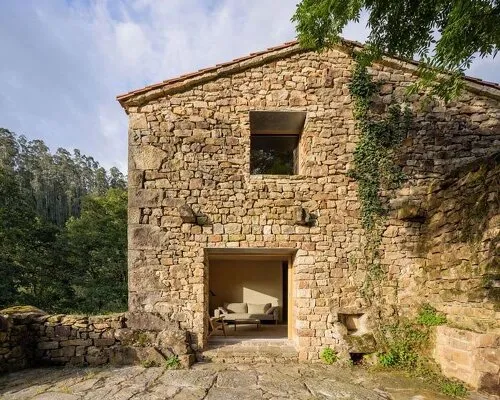
Once a forgotten pasiego cabin (the pasiego people are a semi-nomadic pastoral culture native to the Cantabrian mountains), the structure sat abandoned until designers at Estudio Minima saw something worth saving in its thick, weathered walls. The result, reported by Designboom, is a home where deep energy retrofit and vernacular memory live side by side with genuine contemporary comfort.
Working with the walls, not against them
The original stone exterior was left almost entirely untouched. That's the point. Rather than stripping the building back or modernising its silhouette, the team introduced what they describe as a layered inner envelope - essentially a new insulated skin built carefully within the existing structure. The stone walls, which can be half a metre thick in traditional pasiego construction, become both the aesthetic anchor and the thermal mass of the whole design.
This approach sits at the heart of what's sometimes called deep energy retrofit: upgrading a building's energy performance dramatically without erasing its character. For old rural structures, it's often a smarter path than demolition, and it's increasingly being recognised as one of the more sustainable options in residential architecture.
Why this kind of project matters right now
We're in a moment where the conversation around sustainable homes has moved well past solar panels and recycled materials. The question now is also about embodied carbon - the energy already locked up in existing buildings and the environmental cost of tearing them down. Restoring a stone cabin rather than constructing a new holiday home is, in that sense, a genuinely low-impact choice.
But this project isn't just an exercise in responsible architecture. It's also deeply livable. The layered interior creates intimate, well-insulated spaces that feel warm and considered, while the rough stone surfaces and traditional proportions keep you connected to the landscape outside. That tension between old and new, rough and refined, is what makes spaces like this feel so compelling.
The bigger picture
Across Europe, there's a growing appetite for this kind of adaptive reuse - especially in rural areas where vernacular buildings carry real cultural weight. Pasiego cabins are part of a specific way of life that has shaped a whole region. Giving one of them a second life as a modern home isn't just good design. It's a small act of preservation.
If you've ever scrolled past a crumbling stone cottage and thought "someone should do something with that" - well, someone did. And it looks incredible.