There's a quiet philosophy embedded in good architecture - the idea that a building shouldn't just shelter you, but guide how you move, pause, and pay attention. A new project along a coastal valley in China does exactly that, and it's worth slowing down to appreciate why it works so well.
Twin structures, one conversation
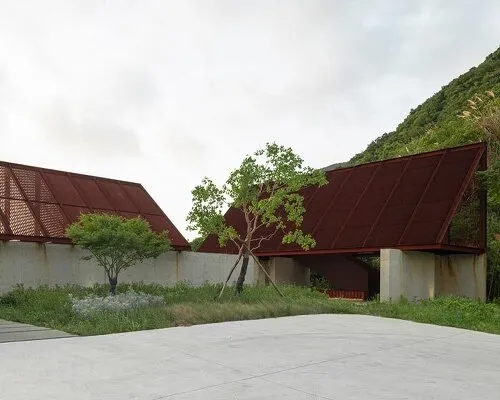
The project consists of two pavilions clad in corten steel, that warm, oxidised material that ages into rich shades of amber and rust. Set within a coastal valley, the structures are positioned to create what the designers describe as a sequence of movement - not just a place to arrive at, but a journey through.
Rather than offering a single fixed viewpoint of the sea, the pavilions are designed to reveal shifting perspectives as you move between and around them. The ocean appears differently depending on where you stand, what angle you're approaching from, and which moment in the sequence you've reached. It's architecture as choreography.
Why corten steel makes sense here
The material choice isn't just aesthetic, though it is undeniably beautiful against a coastal backdrop. Corten steel is chosen for its durability and its ability to develop a natural patina over time, essentially protecting itself while growing more visually interesting with age. In a seaside environment where salt air can be brutal on surfaces, it's a practical and poetic choice all at once.
The earthy tones also ground the pavilions within the landscape rather than imposing on it - they read almost like geological formations, as though they've always belonged to the valley.
The pause as a design element
What's most compelling about this project, reported by Designboom, is how deliberately it incorporates stillness. The sequence of movement is punctuated by what the designers call "moments of pause" - intentional places where you're invited to stop, look, and simply be in the space.
In an era where we tend to photograph a view and immediately move on, there's something quietly radical about architecture that asks you to linger. These pavilions aren't Instagram backdrops. They're designed to slow you down.
It's a reminder that the best spaces don't compete with their surroundings for attention - they help you see those surroundings more clearly. And sometimes, a well-placed shelter, a carefully angled frame, and the sound of the sea is all you really need.