At the Aysaita Refugee Camp in northeastern Ethiopia, roughly 10,000 children under the age of ten are growing up without something most of us never thought twice about as kids: a place to play. The camp, home to around 40,000 Eritrean refugees in the Afar region, is a place where survival comes first - and play, understandably, tends to fall off the priority list.
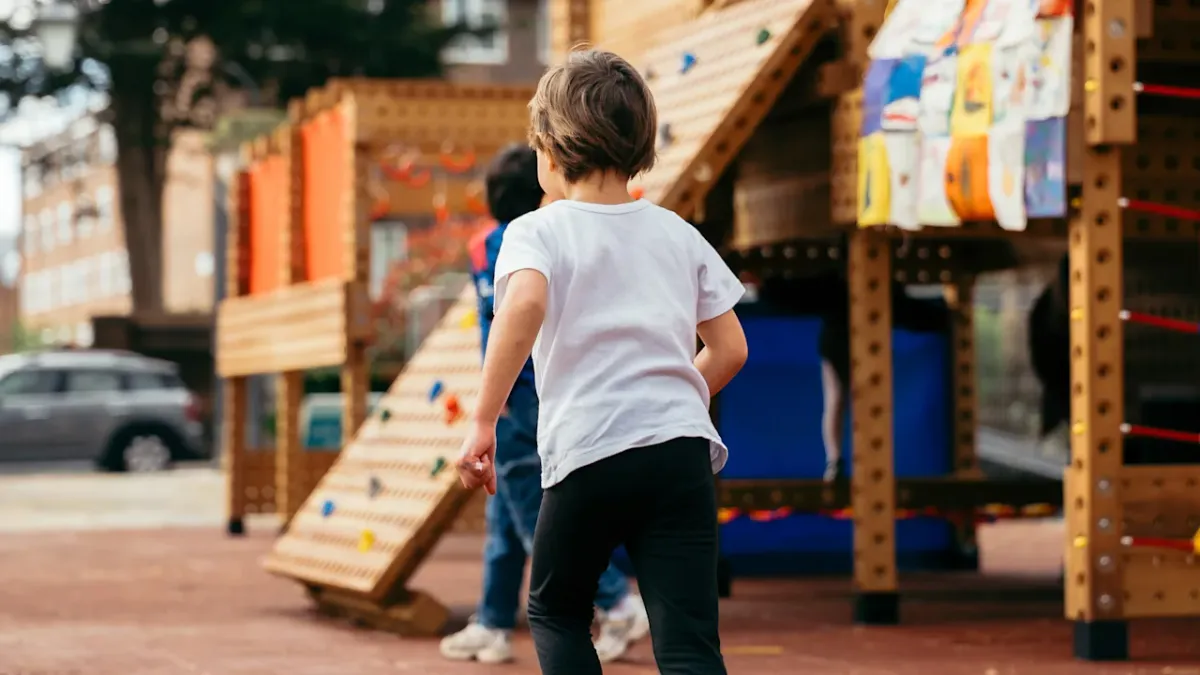
But a new initiative reported by Fast Company is challenging that assumption with a clever, modular playground kit designed specifically for communities displaced by conflict.
Why play isn't a luxury
It's easy to think of play as a nice-to-have, especially when humanitarian organizations are stretched thin trying to provide food, shelter, and clean water. The reality, though, is more complicated. Research consistently shows that play is essential for children's cognitive and emotional development - helping build executive function, resilience, and social skills. For kids who have experienced trauma and displacement, that's not just beneficial. It's genuinely important for long-term wellbeing.
The problem is that traditional playground equipment is expensive, hard to transport, and difficult to assemble without specialist help. That's where this new design approach comes in.
A kit built for the real world
The concept, described in Fast Company's coverage, works a bit like Lego - modular components that can be configured in different ways, transported more easily than conventional playground structures, and put together by people on the ground without needing a team of engineers. It's practical design thinking applied to a genuinely hard problem.
That kind of flexibility matters enormously in refugee camp settings, where conditions change, resources are unpredictable, and the people who need to use and maintain equipment aren't always specialists.
Design with a purpose
What makes this project compelling isn't just the ingenuity of the kit itself - it's what it represents. When designers turn their attention to communities that are often invisible in mainstream product development, the results can have an outsized impact. A playground might seem small against the scale of a humanitarian crisis. But for a seven-year-old who has never known anything but the camp, having somewhere safe to run, climb, and just be a kid is anything but small.
Projects like this are a reminder that thoughtful design doesn't have to be reserved for consumers with spending power. Sometimes the most meaningful work happens at the intersection of creativity and genuine human need.