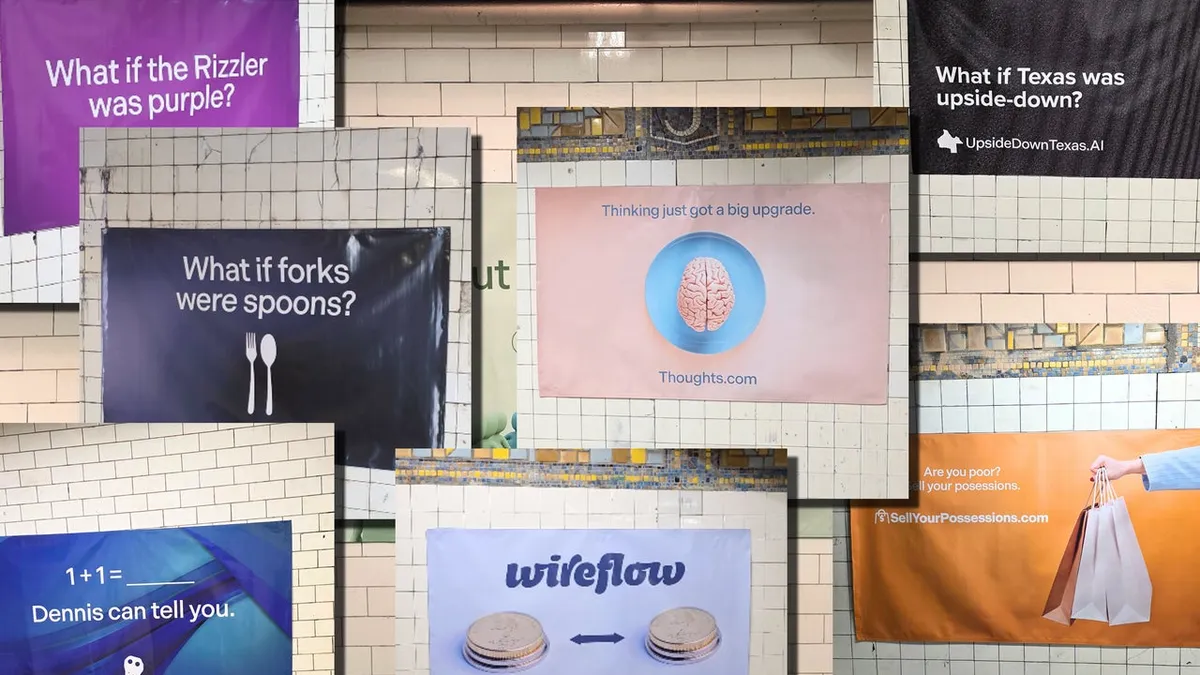
There is a specific flavour of digital ad haunting the internet right now. You've scrolled past them. You've squinted at them. You've maybe even clicked one by accident and then felt vaguely ashamed. They're the AI startup ads - cryptic, aggressive, and weirdly confident about a product you cannot quite picture.
Fast Company recently spotlighted a trend that will make you feel very seen and slightly creeped out: fake AI ads that perfectly mimic the real ones. And the parody works because the source material is already pretty unhinged.
The anatomy of an AI ad
Here's the formula. Take a short, imperative sentence. Make it sound like a manifesto. Add absolutely zero concrete information about what the product actually does. Boom - you have yourself an AI startup advertisement.
Real examples from the wild include gems like "Own Your Inference" and "Put AI Agents to Work for People." And then there's the genuinely ominous "Stop Hiring Humans" - which, to be fair, does communicate something, just not anything that makes you feel warm and fuzzy about the future of civilisation.
The voice is always direct. Always talking to YOU, the viewer, as if it has identified your exact pain points and is here to fix them - while somehow never mentioning what those pain points are, or what the fix looks like, or honestly what the company even sells.
Why does this parody hit so hard?
The reason fake AI ads land so perfectly is because the real ones are already operating at maximum abstraction. When your actual advertising is indistinguishable from satire, you might have a messaging problem.
But here's the thing - it's not entirely accidental. This vagueness is a strategy. If your copy is cryptic enough, it sounds sophisticated. It sounds like the listener just isn't smart enough yet to understand. It weaponises FOMO and intellectual insecurity at the same time. Genuinely diabolical, if you think about it.
Soulless, but make it content
What the fake ads expose is how much of the current AI hype cycle runs on vibes rather than substance. The aesthetic is confidence. The content is fog. And somewhere in that fog, a startup is burning through venture capital convincing people that their inference ownership problems are finally about to be solved.
The fact that parody versions are "perfectly soulless" - as Fast Company puts it - says everything about where tech advertising has ended up. When the joke is identical to the real thing, the real thing is the joke.
Somewhere out there, a growth marketer is reading this and nodding while drafting a new headline that says "Eliminate Human Bottlenecks." And honestly? It'll probably convert.