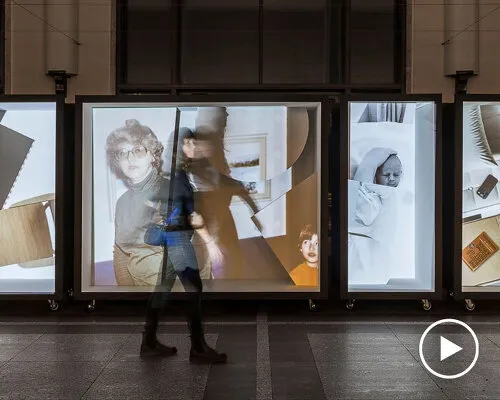
You think you know what home means. Four walls, a roof, maybe a fridge full of questionable leftovers. Then a group of architecture students in Bratislava goes and completely dissolves that comfortable little assumption, and suddenly you're standing in a projection of fragmented interiors questioning everything.
A new student exhibition currently running in the Slovak capital is doing something genuinely interesting with a concept that could easily have gone pretentious: it's reframing the idea of home not as a physical place, but as something assembled from memory, sound, and light. The kind of thing that sounds like an art school cliche until you actually experience it and feel it in your chest.
Four modules, infinite feelings
The exhibition is structured around four modular units, each offering a different fragmented reading of interior space. Rather than showing you a house and saying 'this is home,' the setup breaks domestic experience into pieces - sensory, emotional, spatial - and lets you put it back together yourself. Or not. Maybe it stays broken. That's kind of the point.
Sound plays a big role here, which makes a lot of sense if you think about it. Home is maybe the most acoustic place in your life - the specific creak of a particular floorboard, the way voices carry through certain walls, the silence that has its own texture. Layering that with projection and memory-driven spatial design is a genuinely smart way to get at something that pure architecture often struggles to capture.
Why student work like this actually matters
It's easy to dismiss student exhibitions as stepping stones - work that exists mainly to tick an academic box. But projects like this one, reported by Designboom, are often where architecture gets its most honest and experimental thinking done. Nobody's designing for a client. Nobody's worrying about load-bearing walls or building permits. The question is purely: what IS this thing we call home, and how do you make someone feel it?
The modular approach is also worth noting. Modularity in architecture usually means efficiency, scalability, prefab housing. Here it means something closer to how memory actually works - in fragments, in units that don't always connect cleanly, in pieces you can rearrange but never quite complete.
Is it going to change how we build houses? Probably not immediately. But it might change how a few future architects think about what they're actually building when they build a home. And that's worth a trip to Bratislava.