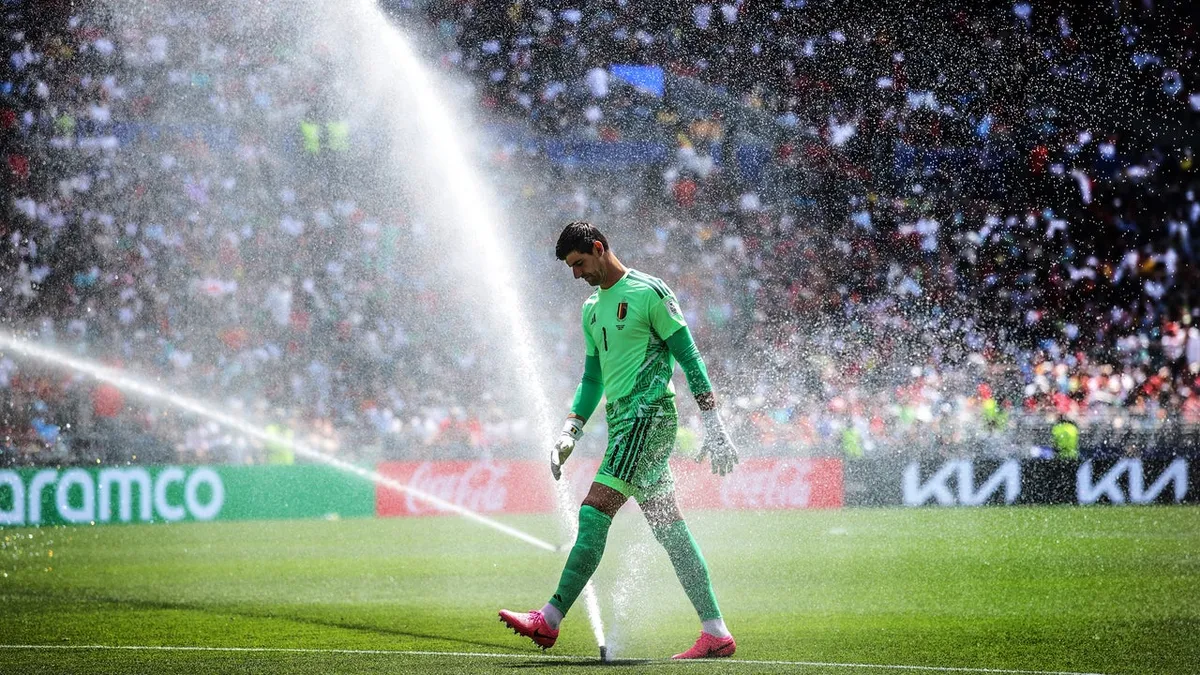
Here is a fun way to ruin your summer plans: imagine flying to the 2026 World Cup, getting your overpriced beer, finding your seat, and slowly discovering that the entire venue is operating at "surface of the sun" settings. Congratulations, you are now a human brisket.
According to a report by Future for Football, a group focused on climate and sustainability in soccer, 10 of the 16 stadiums hosting the 2026 World Cup across the U.S., Canada, and Mexico are at high risk of extreme heat conditions. That is not a typo. That is 62.5% of venues potentially turning fans and players into well-done steaks, and a warming climate means it is only going to get worse over time.
So what can architects actually do about it?
Quite a lot, as it turns out. As Fast Company reports, smart stadium design is not just about making things look cool on Instagram - it is about keeping thousands of people from overheating in real time. Sports architects are increasingly thinking about shade coverage, airflow engineering, and the strategic use of materials that do not absorb and radiate heat like a cast iron skillet.
Roof overhangs and canopy designs can block direct sunlight from hitting spectator areas during peak afternoon hours. Orientation of the stadium itself matters too - a venue angled correctly relative to the sun can dramatically cut how much solar radiation beats down on the stands. Then there is ventilation, which in modern stadium design is less "open a window" and more "precisely calculated wind tunnel geometry."
Why this matters beyond just being sweaty and miserable
Heat is not just uncomfortable. It is a genuine public health risk. Players performing at elite levels in extreme heat face real physiological consequences, and fans - especially older attendees or those with health conditions - face serious danger. The World Cup draws hundreds of thousands of visitors across multiple venues and weeks. Getting this wrong is not a branding problem, it is a safety problem.
The good news is that stadium architecture has genuinely advanced tools to address this. The bad news is that retrofitting existing venues is expensive, complicated, and not always possible before 2026 kicks off.
So yes, pack sunscreen. Bring a hat. And maybe reconsider that 3 PM kickoff seat in the upper deck of a stadium built before anyone was seriously talking about heat adaptation. The beautiful game is getting a very unwelcome climate upgrade, and the architecture world is racing to keep up.