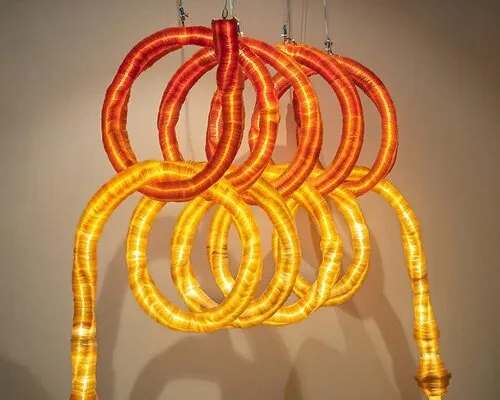
If you've ever looked at seaweed and thought 'yeah, that's basically art,' well - you weren't wrong. A new design project is turning the ocean plant into something genuinely spectacular: two interlocking tubular light installations made from seaweed-based biodegradable material.
Reported by Designboom, the project plays with circular forms arranged in alignment, so that as you move around or through the structure, you're treated to a series of overlapping sightlines. It's the kind of optical layering that draws you in and keeps you looking - which is exactly what good installation art should do.

Why seaweed, and why now?
Seaweed has been quietly having a moment in the design and materials world, and for good reason. It grows fast, requires no fresh water or fertiliser, and absorbs carbon as it grows. As a raw material, it ticks a lot of boxes that traditional manufacturing inputs simply can't.
Using it as the basis for a structural, light-bearing installation is a bold creative leap. It pushes back against the idea that sustainable materials are somehow a compromise - something you choose instead of the good stuff. Here, the biodegradable material isn't a workaround. It's the whole point.
The design itself
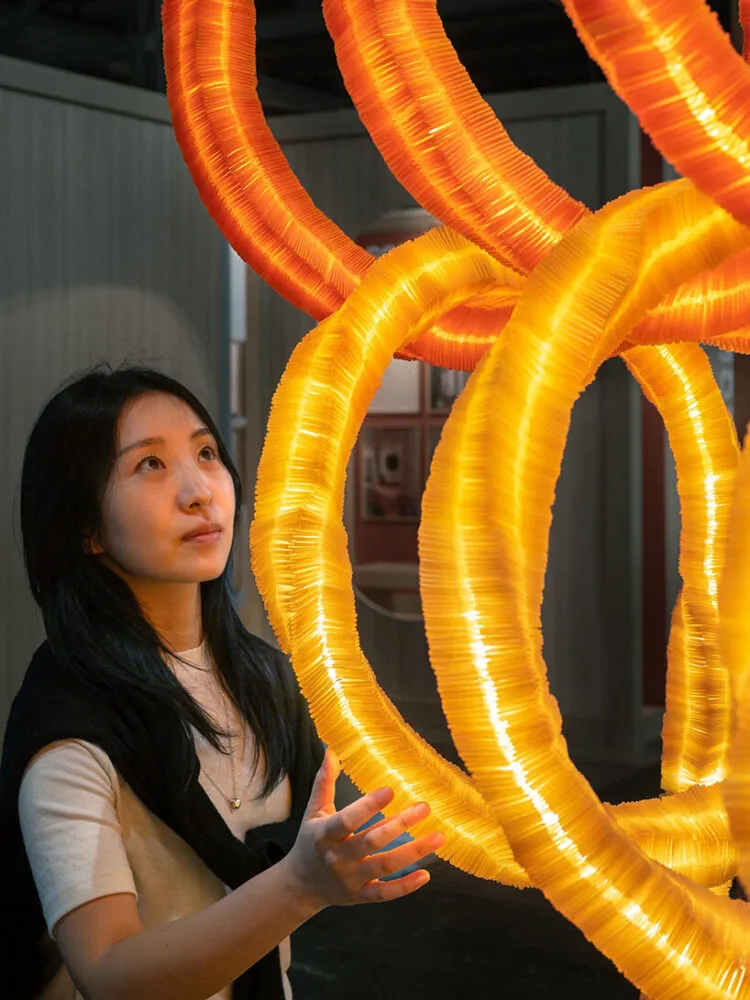
The two tubular forms interlock in a way that feels both architectural and organic. Aligned circular shapes create a rhythm through the structure, and the way light passes through and between them gives the whole thing a softness that's hard to achieve with harder, more industrial materials.
There's something almost meditative about it - forms that reference natural geometry, built from something that literally came out of the sea.
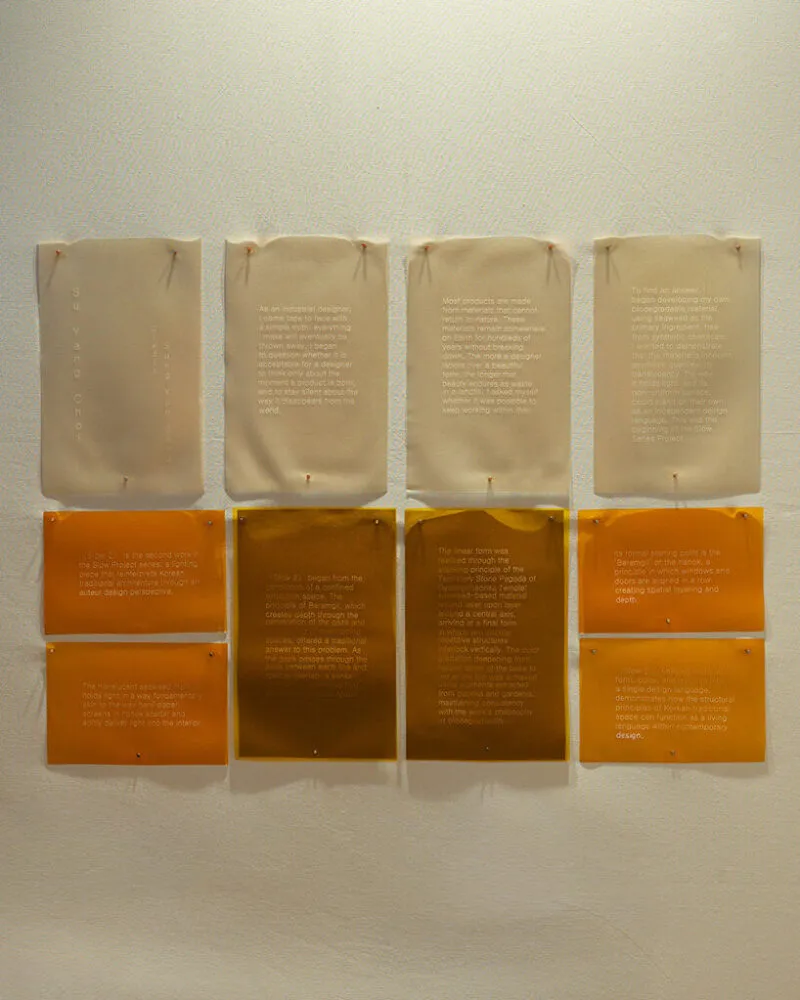
What this signals for design
We're at a point where sustainability in design is moving beyond packaging swaps and recycled plastics. Projects like this suggest a more imaginative future - one where the question isn't just 'how do we make this less harmful?' but 'what becomes possible when we take alternative materials seriously?'
Seaweed-based installations that double as light sculptures aren't going to replace conventional manufacturing overnight. But as a proof of concept, this is the kind of work that shifts expectations about what eco-conscious design can look and feel like. Spoiler: it can look pretty extraordinary.