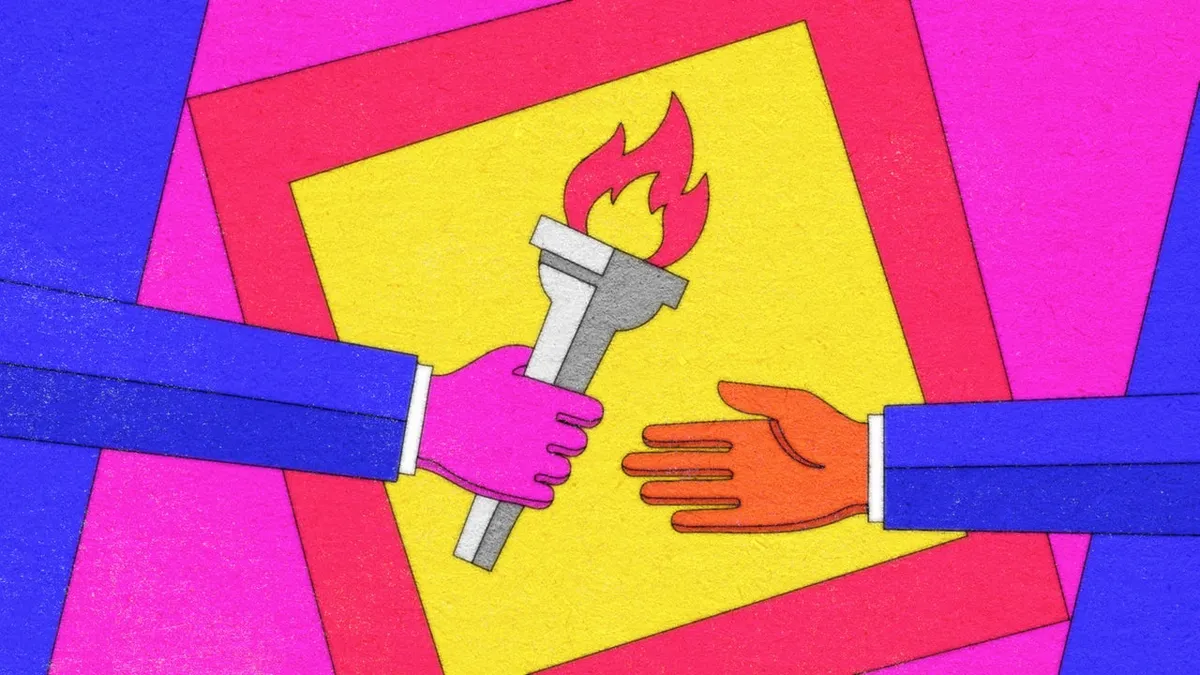
Here's an uncomfortable truth nobody puts on a motivational poster: the skills that make someone a great founder are often the exact same skills that eventually strangle their own company. Tight control, visionary stubbornness, being involved in every single decision - super useful when you're scrappy. Kind of a disaster once you hit scale.
A piece over at Fast Company digs into this awkward corporate adolescence, and honestly, every founder should read it before their team starts quietly resenting them.
The bottleneck has a name, and it's you
The core problem is almost poetic in its irony. Founders build companies precisely because they trust their own judgment above everyone else's. That instinct works brilliantly at the start. Then the team grows, the org chart gets complicated, and suddenly every meaningful decision is still waiting in one person's inbox. The very thing that got you here is now the reason your managers can't manage and your teams can't actually own anything.
It's not malicious - it's almost always unconscious. Founders don't think they're creating bottlenecks. They think they're maintaining standards. There's a very thin line between those two things, and it gets thinner every time the headcount doubles.
Stepping back is not the same as giving up
This is where a lot of founders get it twisted. Loosening your grip isn't a failure of leadership - it's arguably the most sophisticated leadership move you can make. Letting real management layers emerge, allowing the organization to develop its own muscle memory, trusting that your culture can survive without your constant input - that's genuinely hard work.
The companies that scale well aren't the ones with founders who heroically stayed hands-on forever. They're the ones where founders figured out how to make themselves, at least partially, redundant - and were okay with that.
The identity problem nobody talks about
There's also just the raw human weirdness of it. For most founders, the company isn't just a business - it's basically a personality. Stepping back forces a confrontation with the question of who you even are when you're not the one calling every shot. That's less a business strategy conversation and more a therapy conversation, but it matters enormously for whether the transition actually works.
The bottom line? If your company is growing and things still somehow feel chaotic, it might be worth asking whether the chaos is coming from the org - or from you refusing to let the org breathe. Just a thought.