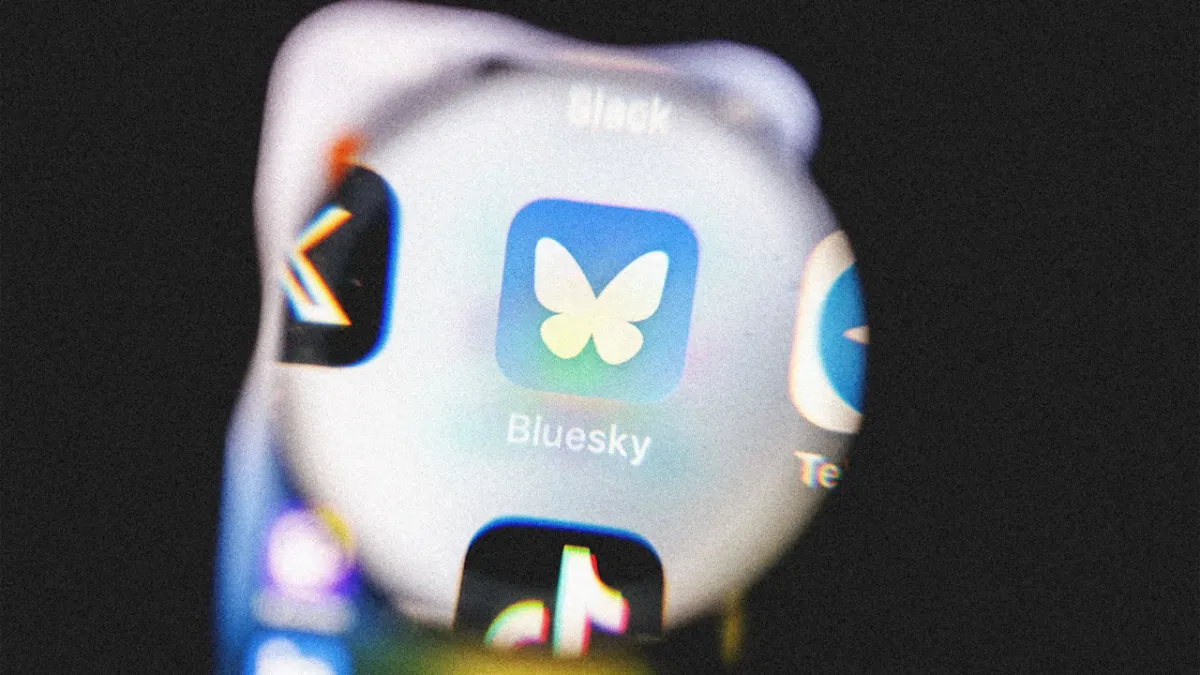
There's a certain irony to watching a platform designed to fix social media slowly bump up against social media's oldest problems. That's where Bluesky finds itself right now - and the story is worth paying attention to, especially if you've been quietly rooting for it.
The glow-up was real
When Donald Trump won his second presidential term in November 2024, a wave of digital anxiety sent millions of users scrambling for alternatives to mainstream platforms. Bluesky was ready. The microblogging app saw a staggering 500% surge in new sign-ups, pushing its active user base to around 2.5 million people at the time. Investors noticed too - the company has raised $100 million to date, including $15 million during that pivotal growth window.
What made Bluesky feel genuinely different was its architecture. Built on an open, federated model, it promised users something rare in the current social media landscape: actual control. You could shape your own feed, carry your identity across platforms, and sidestep the kind of heavy-handed centralized moderation that's frustrated people on Twitter and its successor X for years. For a lot of people, it felt like a breath of fresh air.
Then reality knocked
But growth has a way of stress-testing idealism. According to reporting by Fast Company, Bluesky is now running into the kinds of friction that have tripped up every platform before it - questions about moderation consistency, community management at scale, and what it actually means to build an open platform when the internet is, well, the internet.
The challenges aren't unique to Bluesky. Every social platform eventually hits the tension between freedom and safety, between openness and chaos. The difference is that Bluesky staked its identity on having a smarter answer to those questions. Now it has to prove that answer holds up under pressure.
Why it still matters
None of this means Bluesky is doomed - far from it. The federated model is still a genuinely interesting experiment in how social media could work differently, and the platform's rapid growth shows real appetite for alternatives. But the gap between a promising idea and a platform that sustainably works for millions of people is wide, and closing it requires more than good intentions.
If you're someone who migrated to Bluesky hoping for something better, this moment is probably a useful gut check. Better social media isn't just about better technology - it's about the messy, ongoing work of building communities that actually function. That part, it turns out, no one has fully cracked yet.