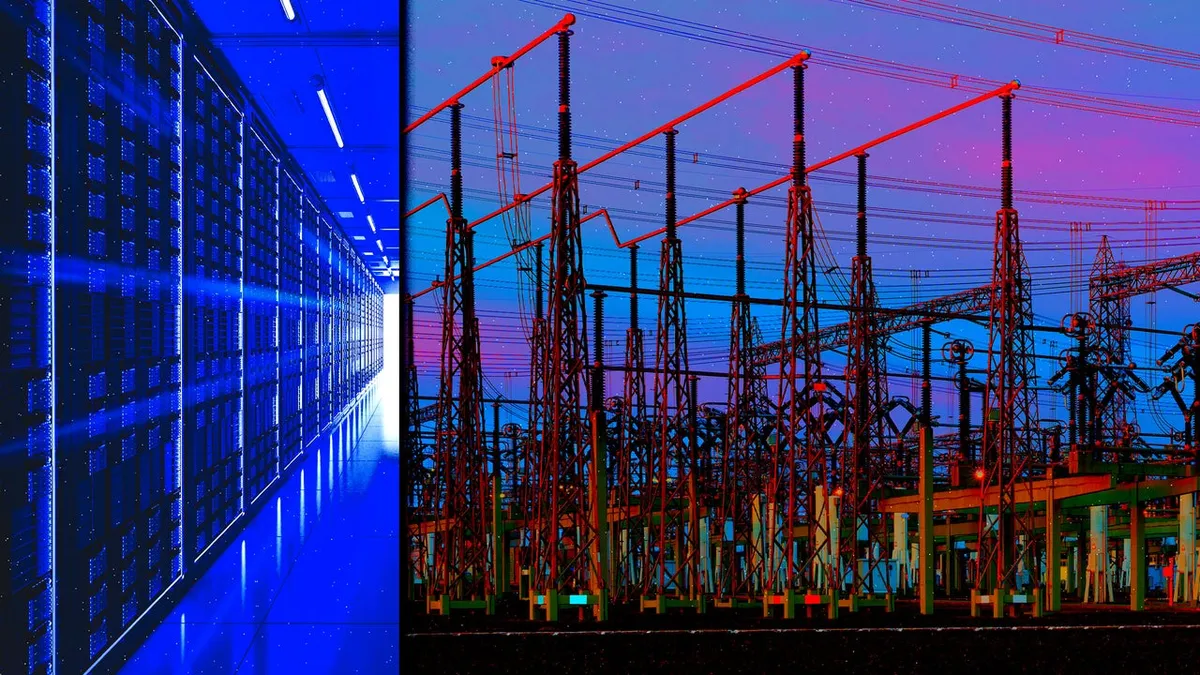
Here's a fun way to feel guilty about asking an AI to write your emails: the entire U.S. power grid is quietly losing its mind trying to keep up with the demand.
According to a report covered by Fast Company, PG&E kicked off 2026 expecting to handle about a year's worth of new electricity demand. By February, they had basically burned through the whole forecast. Interconnection requests - the formal queue for hooking new power consumers up to the grid - were piling up so fast that the regulatory system, which was built for a world where electricity demand barely twitched, simply couldn't cope.
The numbers are genuinely wild
For most of modern history, electricity demand in the U.S. grew at a sleepy pace of under 1% per year. Grid planners basically had time to take a nap between major upgrades. Then AI data centers showed up like that one friend who eats everything at the party.
According to data from the Lawrence Berkeley National Laboratory cited in the Fast Company piece, some grid operators saw load growth hit 4% last year. That might sound modest until you realize it's roughly four times the historical norm. Bain and Company projections make things look even spicier from there.
Data centers are the main culprit. Training and running large AI models is extraordinarily energy-intensive, and the gold rush mentality around AI infrastructure means everyone is trying to plug in at once. The grid, meanwhile, is working with infrastructure that was largely designed decades ago, for a world that looked very, very different.
Why this actually matters to you, personally
This isn't just a utility company headache. Strained grids mean higher electricity prices, potential reliability issues, and a serious bottleneck on how fast the AI industry can actually grow. It also throws a wrench into clean energy goals - you can't run everything on renewables if you can't even get new capacity connected to the grid fast enough.
The regulatory approval process for new grid connections can take years. Years. The AI industry is moving on a timescale measured in months. Something has to give.
There's a certain irony in the fact that the technology everyone is betting on to solve complex global problems is currently being slowed down by something as fundamental as electricity infrastructure. We wanted a sci-fi future and instead we got a very boring, very consequential argument about power line permitting.
The grid isn't broken yet. But it's definitely getting an unexpected workout - and nobody planned for this particular gym session.