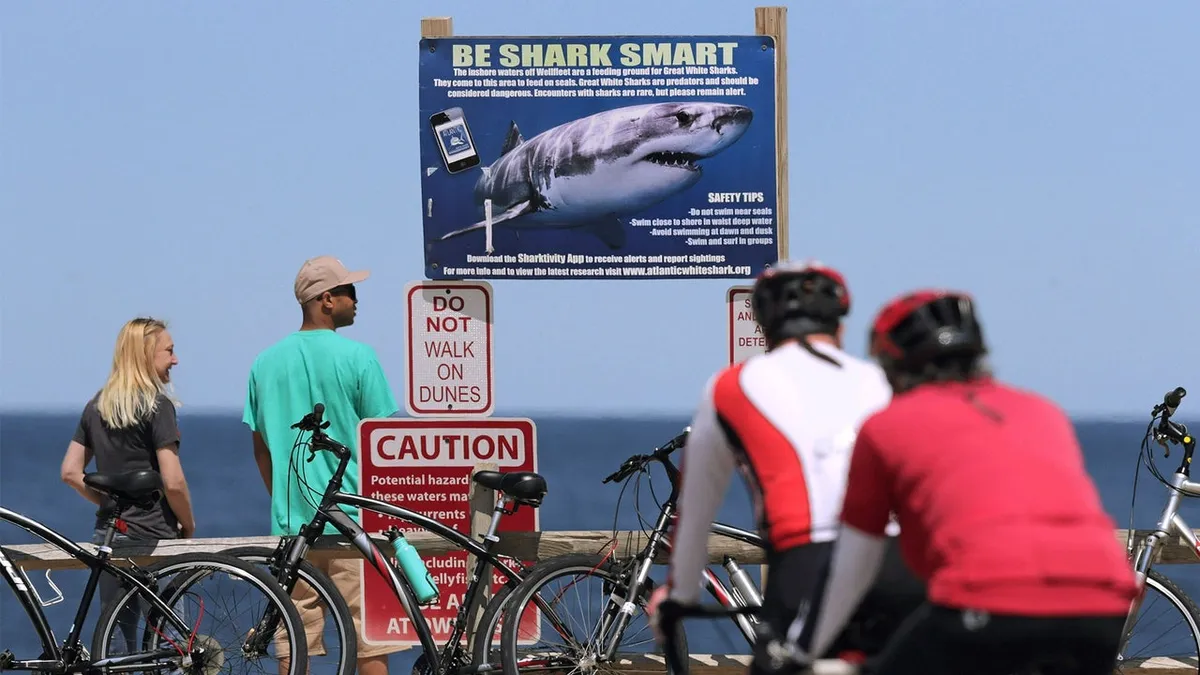
Here's a nightmare scenario: you're a 15-year-old on a Florida beach, you wade into the water, and a shark attacks you. You lose your left hand, part of your right leg, and very nearly your life. Horrific, right? Now here's the part that'll make you genuinely furious - someone else had already been bitten by a shark just 90 minutes earlier, less than 3 miles down the same beach.
Nobody sent an alert. Nobody warned Lulu Gribbin. And so in 2024, she walked into the water without knowing any of this.
The information was out there - it just never reached her
This is the maddening part of Gribbin's story, as reported by Fast Company. The prior attack wasn't a secret. It happened. It was known. But there was no system in place to push that information to beachgoers in the area before the next person got hurt.
Gribbin herself has said plainly that if she had known about the earlier attack, she would not have gone swimming. Full stop. That's it. That's the whole case for why this matters.
So she decided to actually do something about it
Rather than just surviving and moving on, Gribbin's experience has become the catalyst for new federal legislation that would authorize an emergency alert system specifically for shark activity - think Amber Alerts, but for apex predators in your swimming zone.
The idea is straightforward: if there's been a shark encounter in an area, beachgoers nearby should get a notification. Your phone buzzes, you know the situation, you make an informed decision. Revolutionary stuff, apparently, given that it took this long to propose it.
Why this is actually a bigger deal than it sounds
Shark attacks are relatively rare, sure. But the principle here extends well beyond ocean safety. The infrastructure for real-time public safety alerts already exists - we use it for weather, for missing children, for all sorts of emergencies. The gap Gribbin's story exposes is that hyperlocal, fast-moving hazards near recreational spaces have largely been left out of that system.
A 15-year-old shouldn't have to lose a hand to fix that. But here we are, and at least something useful might come out of an absolutely terrible situation.
Lulu Gribbin went through something most of us can barely imagine, and her response was to try to make sure it doesn't happen to someone else. That's the kind of energy that actually changes things.