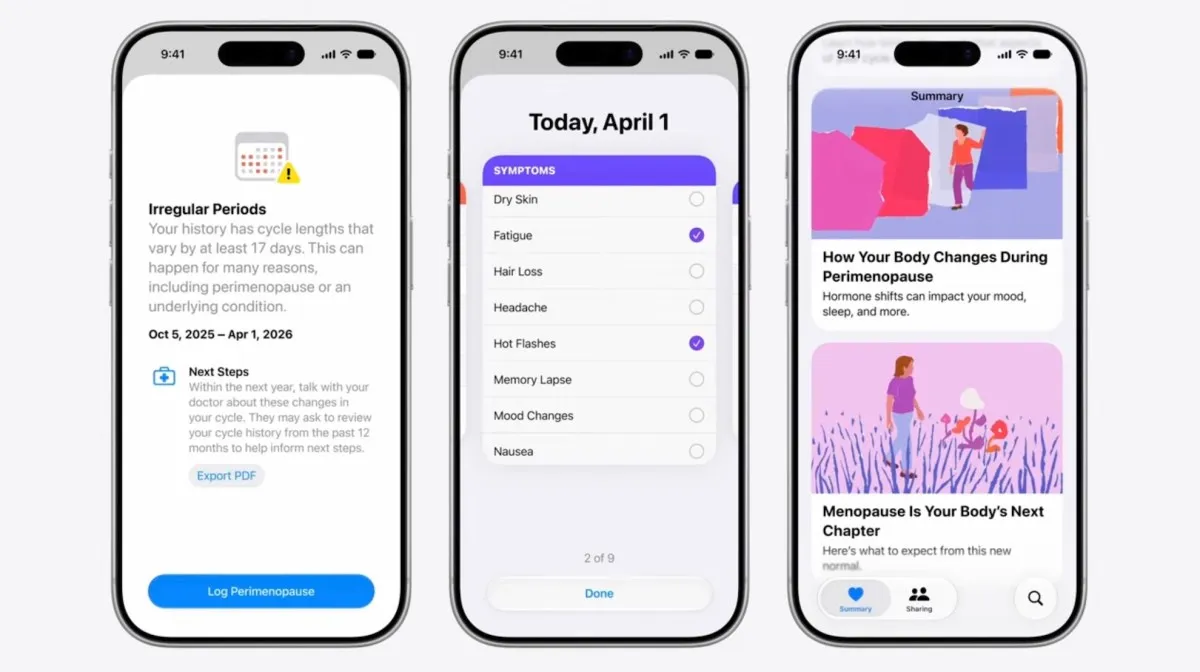
Apple has quietly done something remarkable: it's turned the iPhone into the kind of nosy-but-useful friend who notices things about your body that you've been too busy to clock yourself. The Health app's cycle tracker can now flag when your period patterns look like perimenopause - and yes, that's a bigger deal than it sounds.
Wait, what even is perimenopause?
Perimenopause is the years-long transition before menopause actually kicks in, and it's one of the most under-discussed, under-diagnosed phases of women's health. We're talking irregular cycles, sleep chaos, mood swings, and a general sense that your body has started doing things without consulting you. Most people don't realize they're in it until they're well past the beginning - partly because the symptoms are vague, and partly because the healthcare system has historically treated women's hormonal health with all the urgency of a DMV queue.
So what does the app actually do?
According to TechCrunch, Apple's updated cycle tracker will now send notifications when it detects that your cycle patterns are suggestive of perimenopause. It's not diagnosing you - let's be very clear about that - but it is doing something genuinely useful: connecting the dots between data points you've already been logging and handing you language and context to bring to an actual doctor.
That shift from "my cycle has been weird lately" to "my health app flagged a pattern consistent with perimenopause" is not small. It's the difference between being dismissed in a GP's office and walking in armed with something concrete.
Why this matters more than another fitness feature
There's a long tradition of health tech building features that are technically impressive but practically useless for the people who need them most. Perimenopause tracking breaks that pattern. This isn't a VO2 max estimate for triathletes. This is a feature aimed squarely at a gap in women's healthcare that has existed forever and been filled mostly with "that's just part of getting older, dear."
The fact that a major tech company is now treating this transition as worth tracking - worth notifying people about - is, in a small but meaningful way, a form of validation that the experience deserves attention.
The catch (there's always a catch)
The app can only work with the data you give it, which means consistent cycle logging is the price of admission. If you've been using the Health app as a glorified step counter, you're not going to get much out of this. But for anyone who's been tracking regularly, this update might just give you the heads-up your body has been trying to give you for months.
Your iPhone is now a better listener than most. Rude, but fair.