If you've ever been mid-presentation, deep in a flow state, or simply existing peacefully when Windows decides it's the perfect moment to restart and install updates you definitely did not ask for - congratulations, you're a Windows user.
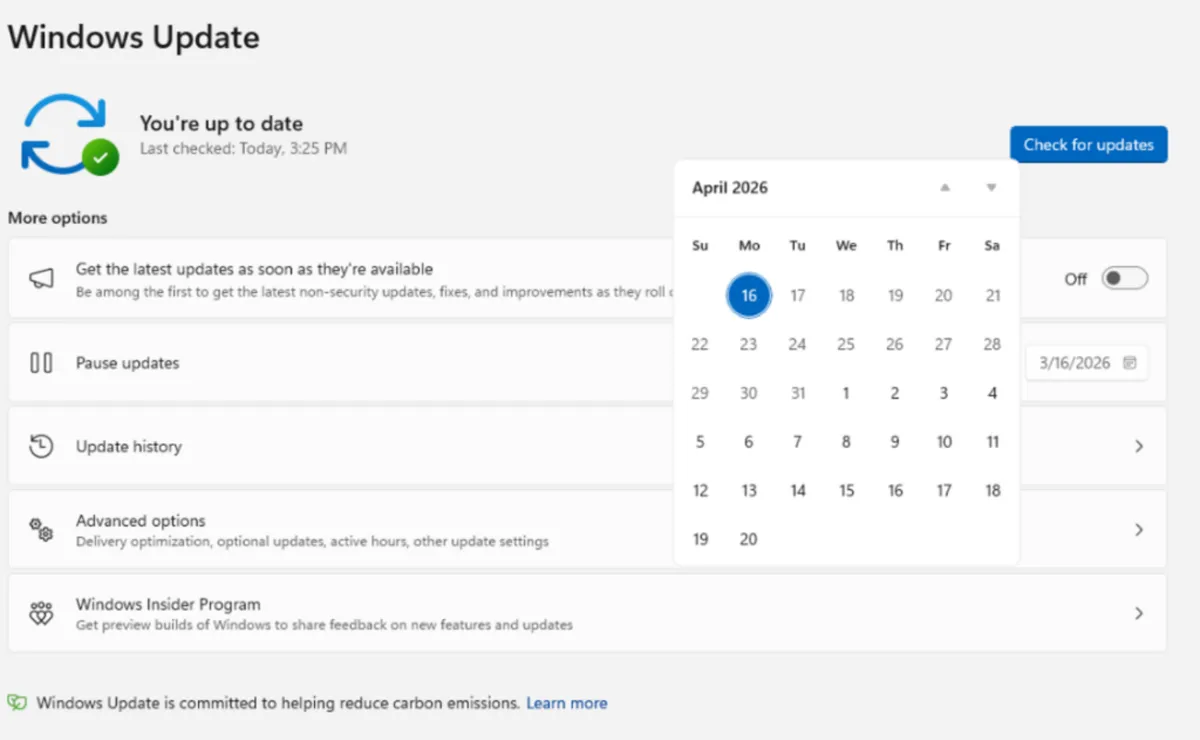
Well, good news: Microsoft has apparently heard your screams into the void and made it possible to pause forced Windows updates indefinitely. The bad news, because there is always bad news, is that it comes with a catch.

The dream scenario
The idea of pausing Windows updates forever sounds like the kind of digital peace treaty we've all been waiting for. No more surprise reboots. No more "preparing to configure Windows" hanging at 34% while you watch your entire afternoon evaporate. Just you, your PC, and the sweet illusion of control.
According to Mashable, Microsoft has made the process easier - but notably not entirely easy. Which, if you think about it, is the most Microsoft thing possible. One step forward, one very deliberate half-step to the side.
So what's the catch?
The indefinite pause option exists, but it isn't just sitting there on your settings screen with a big friendly button. Getting to it requires a bit of legwork - the kind of legwork that filters out casual users and keeps the update machine well-fed with the less technically adventurous among us.
In other words: Microsoft made it possible, not painless. There's a meaningful difference there, and the company knows it.
Why this actually matters
This isn't just a nerdy power-user flex. Forced updates have caused real problems - from breaking software compatibility to wiping custom settings to just being monumentally inconvenient at the worst possible times. For professionals, small business owners, or anyone running specialized software, an unexpected update can be genuinely disruptive.
The ability to pause updates on your own terms is a legitimately important quality-of-life feature. The fact that it took this long, and still requires some effort to enable, says a lot about how Microsoft balances user autonomy against its own update rollout goals.
The bottom line
Is this a win? Kind of. It's a cautious, hedged, very corporate kind of win - the sort where you feel grateful and mildly annoyed at the same time. Progress, technically. But if Microsoft really wanted to make Windows users feel respected, a clearly labeled "leave me alone" toggle in plain settings wouldn't exactly break the internet.
For now, if you want the full details on how to actually make this work, Mashable's breakdown is worth bookmarking - preferably before Windows restarts your browser mid-read.