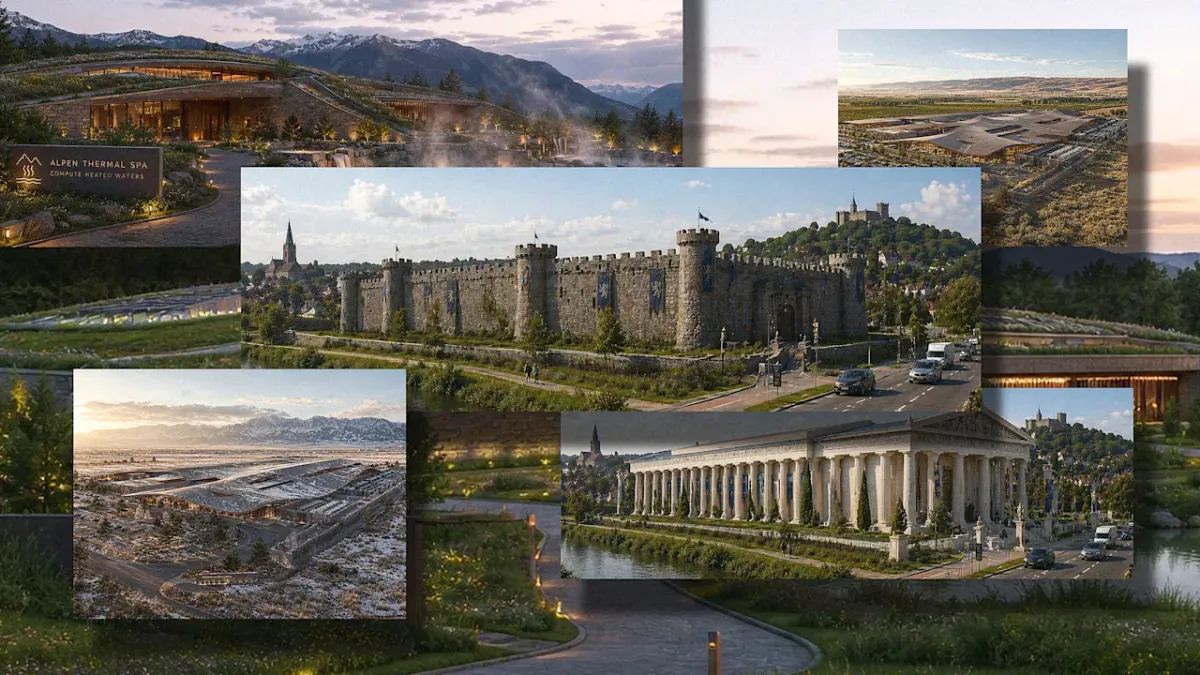
There are roughly 4,000 data centers across the United States right now, and thousands more are reportedly on the way. They're the backbone of the AI boom - the massive, humming facilities that train and run the models everyone is suddenly obsessed with. And almost without exception, they look absolutely terrible.
Think concrete boxes. Blank facades. No windows, no landscaping, no attempt whatsoever at fitting into their surroundings. Unlike almost any other type of large-scale building, data centers seem to exist in a design vacuum, as if aesthetics were considered and then immediately rejected.
More than just an eyesore
The ugliness is actually the least of people's concerns, though it certainly doesn't help. Communities across the country are pushing back against data center development for a long list of reasons. These facilities consume extraordinary amounts of energy and water, and they bring environmental pollution along with them. When a tech company wants to plant one in your neighborhood, the resistance tends to be fierce - and for good reason.
According to reporting by Fast Company, the architectural blandness of data centers isn't accidental. Their function drives almost every design decision. They need to keep equipment cool, secure, and running around the clock. Natural light, interesting facades, green space - none of that is on the priority list when you're building something engineered purely for uptime.
What if they didn't have to be this way?
The interesting question right now is whether the next wave of data centers has to follow the same playbook. As tech companies rush to build more of them - faster than ever, given the insatiable demand for AI computing power - there's a real conversation emerging about whether better design could ease some of the community opposition.
Imagine a data center that looks less like a fortress and more like something that belongs in its environment. It sounds almost absurd, but architects and urban planners are starting to take it seriously. Better aesthetics won't fix the energy and water consumption issues, but they might at least make the conversation more nuanced than a flat-out no.
For the communities being asked to host this infrastructure, the stakes feel very real. The AI revolution is being built somewhere, on land that belongs to people who didn't necessarily sign up to live next to a giant power-hungry box. Whether the industry responds with better design or just more concrete remains to be seen.