There's a quiet giant sitting in your pantry right now. Great Value, Walmart's flagship private label, turns up in nine out of ten American households. According to Nielsen data cited by Fast Company, that makes it the single largest consumer packaged goods brand in the United States - bigger than Coca-Cola, bigger than Pampers. Let that sink in for a second.
And yet, for most of its existence since launching in 1993, Great Value has looked exactly like what it is: the cheap option. Functional, forgettable packaging designed to shout "low price" rather than inspire any real affection. You bought it because it made sense, not because it sparked joy.
That's all changing
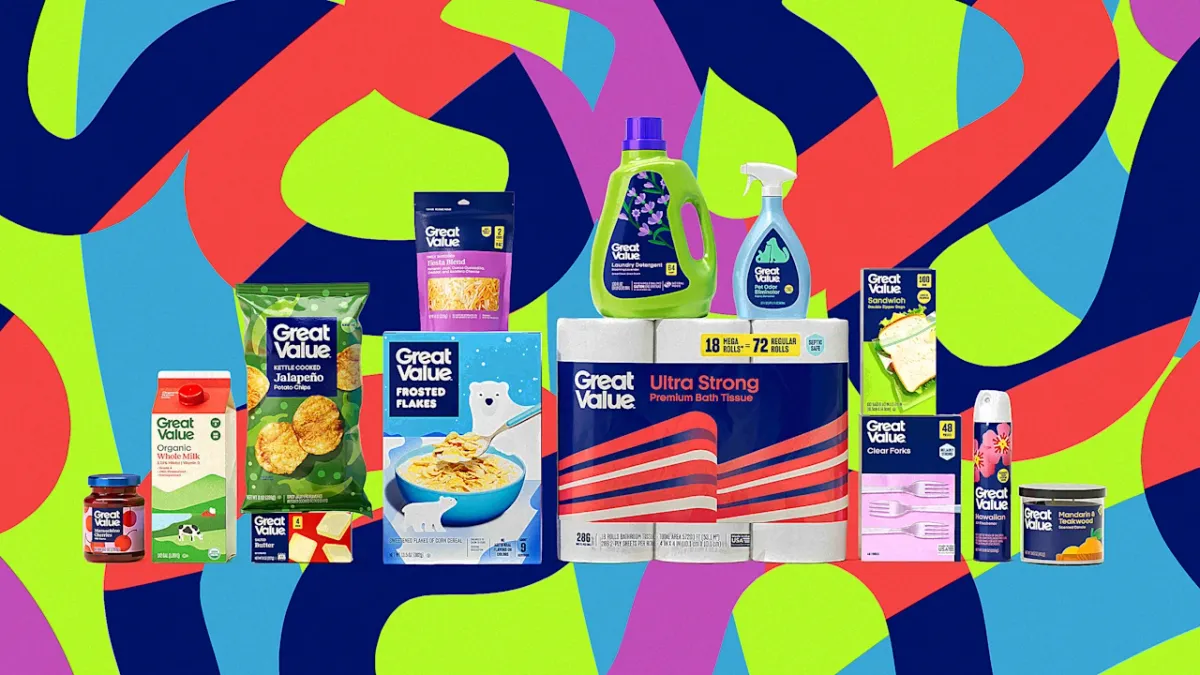
Walmart is giving Great Value a full rebrand, and the direction it's heading is something design nerds have been calling "shoppy shop" - a playful, character-driven aesthetic that feels more like an indie grocery find than a superstore staple. Think bold colors, charming illustrations, and the kind of personality that makes you want to actually look at what's in your cart.
It's a smart move, and it reflects a broader cultural shift happening in retail right now. Private label products have been quietly shedding their stigma for years. The "store brand" used to mean a concession, something you grabbed when money was tight. Now? Trader Joe's built an entire cult following on the concept. Aldi loyalists swear by their in-house picks. The idea that a generic label means lower quality has largely evaporated - especially among younger shoppers who grew up comparing ingredients rather than brand names.
Why this matters beyond the packaging
Great Value's rebrand isn't just an aesthetic exercise. It signals that Walmart understands something important about where retail is headed. As consumers get more comfortable with private labels, the brands that win won't just be the cheapest - they'll be the ones that feel worth reaching for.
There's also a practical reality here: Walmart estimates that shopping Great Value saves families a meaningful amount compared to buying name-brand equivalents. If the new look makes those products easier to embrace without feeling like a trade-down, that's a genuine win for shoppers who are still navigating a tricky economic moment.
Whether the rebrand actually lands will depend on the execution. Playful design can easily tip into trying too hard. But the instinct is right - and frankly, it's about time America's biggest brand started acting like it knows it.