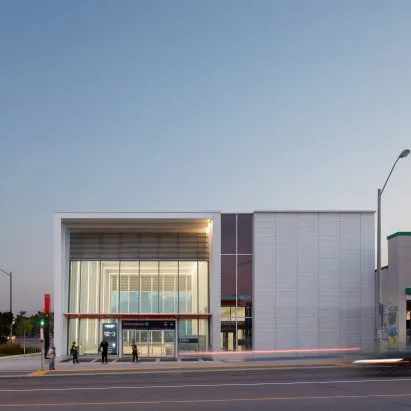
After what felt like an eternity of delays, budget drama, and the kind of municipal squabbling that makes city council meetings appointment television, Toronto has officially opened Line 5 - the Eglinton Crosstown LRT. And it's not just a new train line. It's one of the largest underground rail projects completed in North America in decades.
So what actually opened?
The full line stretches 19 kilometres and features 25 stations in total, with 15 of those burrowed underground through Toronto's Midtown. According to reporting by Dezeen, the stations were designed to integrate into the urban fabric of the city rather than feel like you've descended into a bunker. Which, if you've ever used certain other subway systems, you know is not a given.
The underground section opened in February, with riders finally getting to experience a transit corridor that has been under construction for what feels like longer than some of those riders have been alive.
Why this actually matters
North American cities are notoriously bad at building new rail infrastructure. The costs balloon, the timelines stretch, and the political will evaporates somewhere around year four. The fact that Toronto pushed this through - delays and all - is genuinely significant. A 19-kilometre underground metro line isn't just a commuter convenience, it's a statement that dense, connected urban transit is possible on this side of the Atlantic.
The Eglinton corridor connects some of the city's busiest and most densely populated neighbourhoods, which means this isn't a vanity project or a ribbon-cutting photo op. People will actually use this thing, every single day, in large numbers.
The drama was real, though
Let's not pretend this was a smooth ride (pun absolutely intended). The project faced multiple delays and required settlements between municipal bodies, engineers, and designers - the kind of behind-the-scenes chaos that makes infrastructure projects legendary in the worst possible way. The fact that it opened at all is, in a certain light, a minor miracle of bureaucratic endurance.
But here we are. Trains running. Stations open. Commuters underground and moving through the city at a pace that doesn't involve staring at a red light for four minutes.
For a continent that tends to treat public transit like a nice idea we'll get to eventually, Toronto just made a pretty compelling argument that eventually can actually arrive.