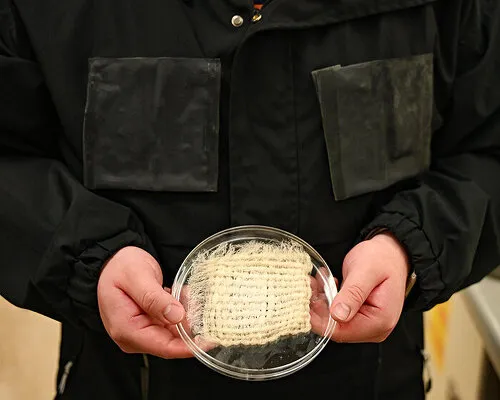
Forget smart watches and heated vests. The most unhinged piece of wearable tech in 2024 is a jacket that pulls water out of thin air and makes it drinkable. Yes, really. Scientists at UT Austin have developed a hydrogel textile - essentially a fabric that absorbs atmospheric moisture - and stitched it into a wearable garment capable of collecting between 400 and 900 milliliters of water per day.
That's roughly two full cups of water, harvested from the literal air around you, just by existing inside your coat. We have entered a new era of outdoor gear and it smells like the future.
So how does this witchcraft actually work?
The secret is in the hydrogel - a moisture-hungry material woven directly into the fabric. As you wear the jacket, the textile passively absorbs humidity from the surrounding air. The collected moisture is then processed into drinkable water, no pumping, no filtering tablets, no suspicious stream required. Just you, your jacket, and the invisible ocean of humidity floating around you at all times.
Researchers designed this with outdoor adventurers and emergency scenarios in mind, and when you think about it, that makes a lot of sense. A hiker caught off-trail, a disaster survivor waiting for rescue, or honestly just a very forgetful camper who left the water filter at home - this jacket covers them all.
Why this is a bigger deal than it sounds
Water scarcity is one of the defining crises of the 21st century. Billions of people lack reliable access to clean drinking water, and climate change is making that problem dramatically worse. The elegant thing about atmospheric water harvesting is that humidity exists almost everywhere on Earth, even in arid regions. A wearable that taps into that resource without requiring power infrastructure or heavy equipment is genuinely radical technology dressed up in a very normal silhouette.
The 400-to-900 milliliter range is worth paying attention to too. The variance likely depends on ambient humidity levels, meaning the jacket performs better in coastal or tropical environments than, say, the middle of the Atacama Desert. But even at the low end, that's a meaningful daily water contribution for someone in a survival situation.
The bottom line
UT Austin researchers have essentially built a jacket that does what Bear Grylls has been improvising dangerously for decades, except cleanly, passively, and without anyone having to drink anything alarming. As reported by Designboom, this hydrogel textile could genuinely reshape how we think about emergency preparedness and backcountry gear.
Now if they could just figure out how to make it stylish enough for brunch, we'd be unstoppable.