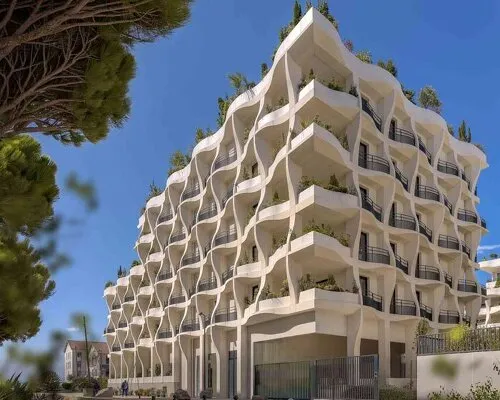
Flat facades are boring. There, someone said it. While the rest of the residential architecture world keeps slapping grey rectangles next to other grey rectangles and calling it 'modern living', French architect Vincent Callebaut has apparently looked at a seashell, looked at a housing block, and decided there was no reason these two things couldn't be the same thing.
The shell of it
Callebaut's new residential project in Montpellier wraps its housing units in curved, shell-like facades that look less like apartments and more like something you'd find washed up on a very glamorous beach. According to designboom, the organic forms aren't just aesthetic flexing - they're doing actual architectural work, enfolding the buildings in a way that creates natural sheltering and visual flow.
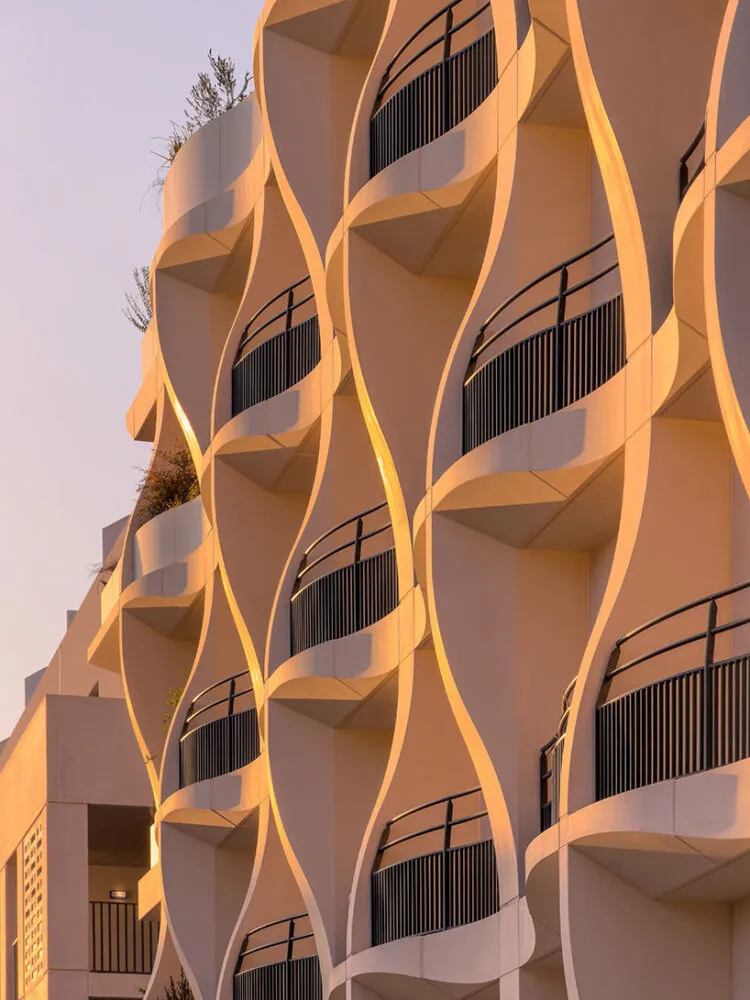
The real magic, though, is in how the project organizes life around loggias, patios, and shared terraces. This is the kind of thinking that makes you realize most apartment buildings are essentially just stacked boxes with doors, and that we've all collectively agreed to pretend that's fine.
Why this actually matters
Loggias - those semi-outdoor covered spaces that sit somewhere between a balcony and an interior room - are the unsung heroes of residential design. They give you outdoor space without the full exposure of a balcony, creating zones where you can have a morning coffee in light rain without becoming completely miserable. Pair that with shared terraces that encourage actual human interaction between residents, and you've got a building that's trying to fight the isolation epidemic one curved wall at a time.
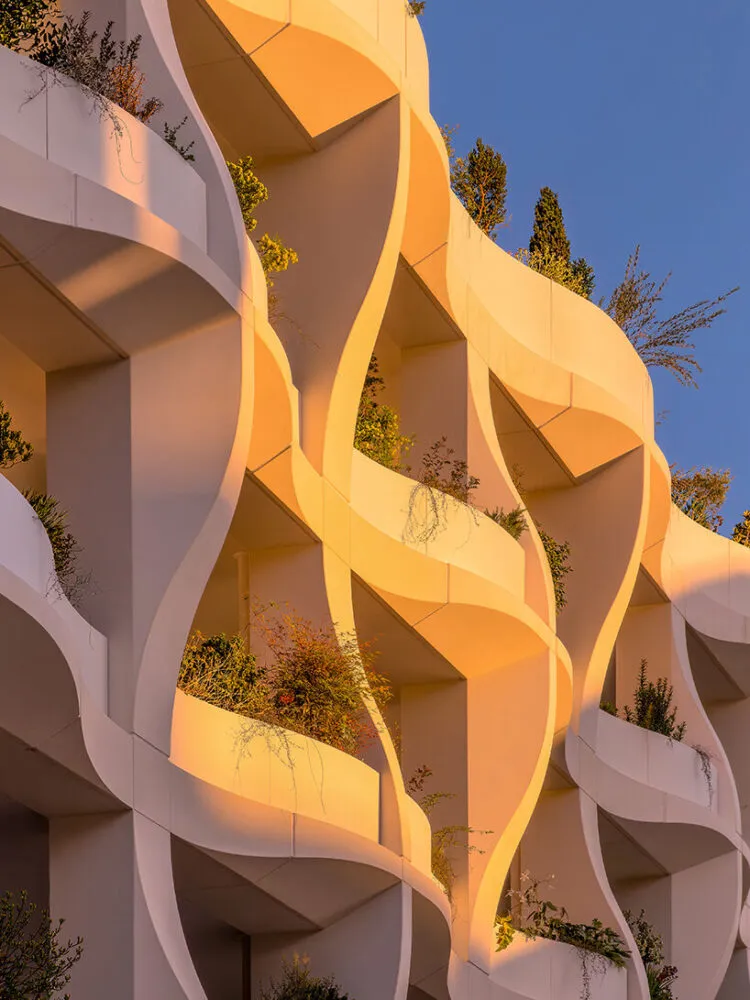
Shared spaces in residential design have been making a quiet comeback, partly because people are realizing that living in a sealed pod with zero connection to your neighbors is, medically speaking, not great for you. Callebaut's layout leans hard into this, using the building's communal areas as a genuine organizing principle rather than an afterthought corridor nobody uses.
Form following feeling
There's something psychologically different about curved architecture. Straight lines and sharp corners quietly signal efficiency and control. Curves signal something warmer - organic, natural, a little less hostile. Whether that translates into residents actually being happier is a question for the long-term studies, but the instinct feels right.
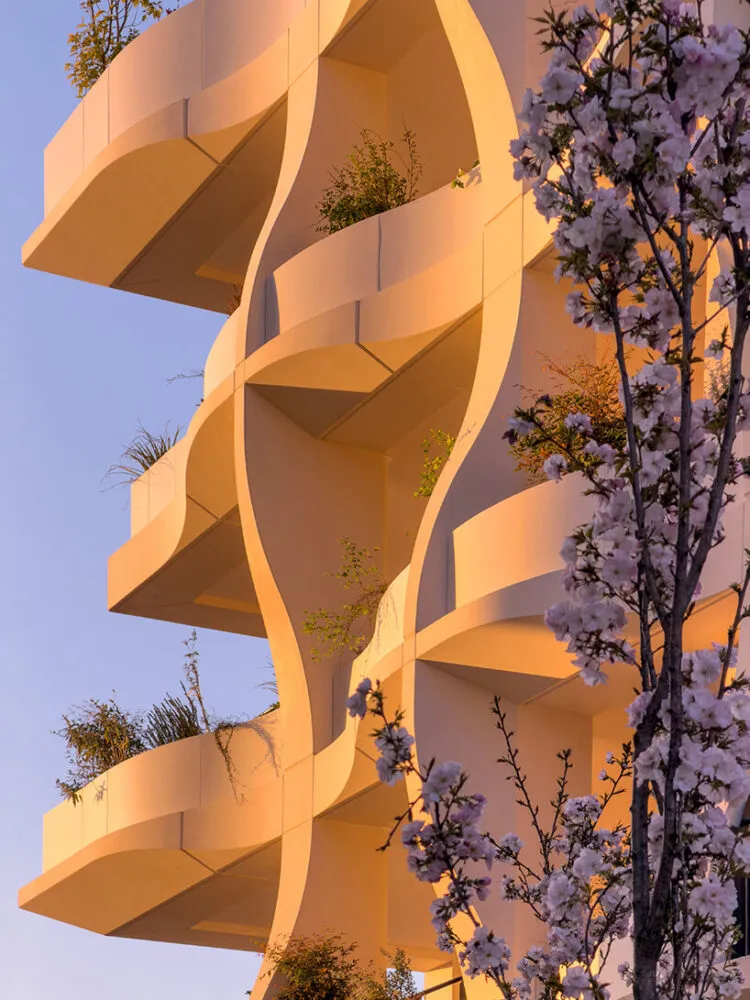
Callebaut has built a reputation for ambitious, biophilic design that treats nature as a collaborator rather than a decorative afterthought. Montpellier's shell-homes are a more restrained expression of that philosophy - still unmistakably his, but grounded enough to work as actual housing rather than a concept render that will never be built.
The bar for residential architecture is on the floor. It's genuinely exciting when someone decides to pick it up.