There's something deeply satisfying about art that makes you stop and ask, "Wait - is that real?" That's exactly the reaction the Haas Brothers are chasing with their latest sculptural work, and honestly, they're nailing it.
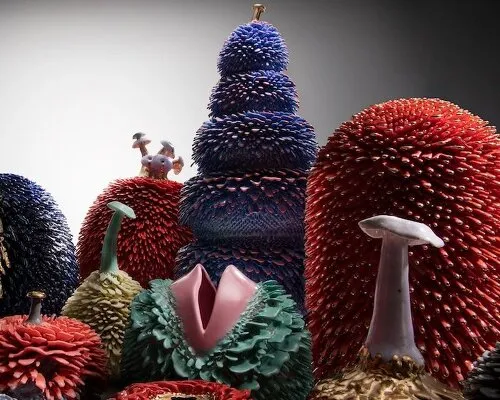
The Los Angeles-based artist duo - made up of twins Simon and Nikolai Haas - have built a reputation for creating work that sits somewhere between joyful and unsettling. Their cast sculptures investigate how we perceive the world around us, using hyper-lifelike forms to trigger emotional responses that are surprisingly hard to pin down. Familiar objects rendered in unexpected materials, textures that feel wrong in the most right way possible - it's the kind of art that lodges itself in your brain long after you've left the gallery.
Playing in the uncanny valley
The concept of the "uncanny valley" - that eerie discomfort we feel when something looks almost human or almost real, but not quite - is well known in robotics and animation. The Haas Brothers are bringing that same psychological tension into the physical art space, and the result is genuinely compelling.
Their cast pieces, currently on display at the MAD Museum in New York, challenge viewers to sit with the complexity of their own reactions. Do you feel delight? Unease? Both at once? That's precisely the point. The work doesn't let you settle into a simple response, which is what separates it from decoration and plants it firmly in the territory of art that actually does something to you.
Why joyful and strange make such a good pair
What's particularly refreshing about the Haas Brothers' approach is that the strangeness never tips into grimness. Their aesthetic is rooted in a kind of playful wonder - think maximalist colour, organic forms, and a sensibility that feels more like a psychedelic fever dream than a sterile conceptual exercise.
In a cultural moment where so much contemporary art leans heavily on irony or shock value, their commitment to genuine joy feels almost radical. The dreamlike quality of the work invites you in rather than pushing you away, even as it quietly destabilises your assumptions about what you're looking at.
For anyone in New York or planning a visit, the MAD Museum showing is well worth carving out time for. And if you can't make it in person, following their work online gives you a solid sense of what makes their practice so distinctive - though something tells us the full effect really does require standing in the room with these objects, wondering whether your eyes are playing tricks on you.
Sometimes the best art is the kind that reminds you perception is a lot more slippery than we usually give it credit for.