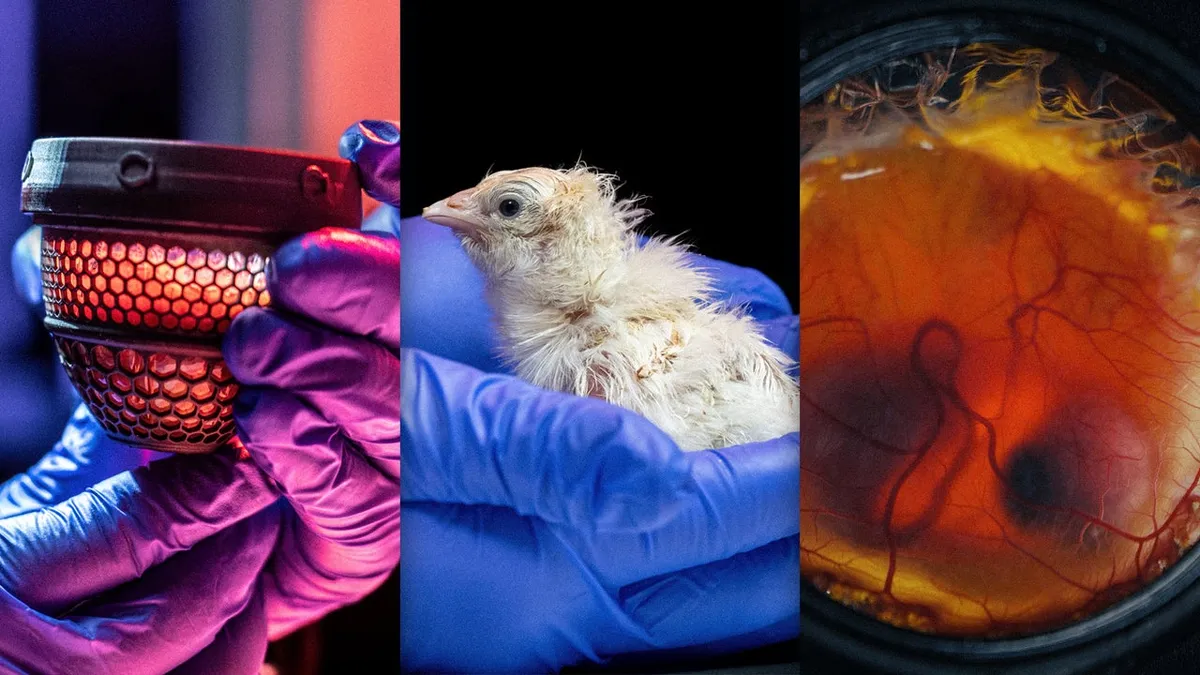
If you thought bringing back the woolly mammoth was the wildest thing Colossal Biosciences had on its to-do list, buckle up. The Dallas-based de-extinction startup - yes, that's a real job category now - has been quietly hatching live chickens inside 3D-printed artificial eggs. In a lab. Near Dallas. Like it's nothing.
According to Fast Company, there's currently a flock of perfectly ordinary chickens living in a coop near Dallas that are, biologically speaking, completely unremarkable. The twist? They were born inside lab-engineered artificial eggs designed to replicate all the functions of a natural one. So, you know, just a regular Tuesday at Colossal.
Wait, but why?
Here's where it gets genuinely interesting rather than just deeply weird. The artificial egg system isn't about chickens. Chickens are just the test subjects - the lab rats of the bird world, if you will. The real target is the South Island giant moa, a massive flightless bird that went extinct in the 15th century, largely because humans apparently couldn't help themselves.
The idea is that if you can grow a bird embryo in a controlled artificial environment, you can potentially do it for species whose eggs you can't exactly pop down to the farm to collect. Extinct or critically endangered birds don't leave a lot of breeding options on the table, so engineering the incubation process itself opens up possibilities that simply didn't exist before.
The conservation angle is actually kind of important
Beyond the moa resurrection mission - which, let's be honest, sounds like the opening act of a disaster film - the technology has real potential for birds that are endangered right now, today, and not just in the fossil record. Being able to incubate eggs outside of a living parent could be a genuine lifeline for species teetering on the edge.
Colossal has made a name for itself swinging for the fences on de-extinction, with the mammoth project grabbing most of the headlines. But this artificial egg system suggests the company is also building tools with more immediate conservation applications, which is the kind of thing that makes the whole enterprise feel slightly less like a theme park pitch and slightly more like actual science.
Will they bring back the moa? Unclear. Will your future grocery store chicken have a surprisingly sci-fi origin story? Possibly. Either way, Colossal is out here making the future weirder than we planned for, and honestly, respect.