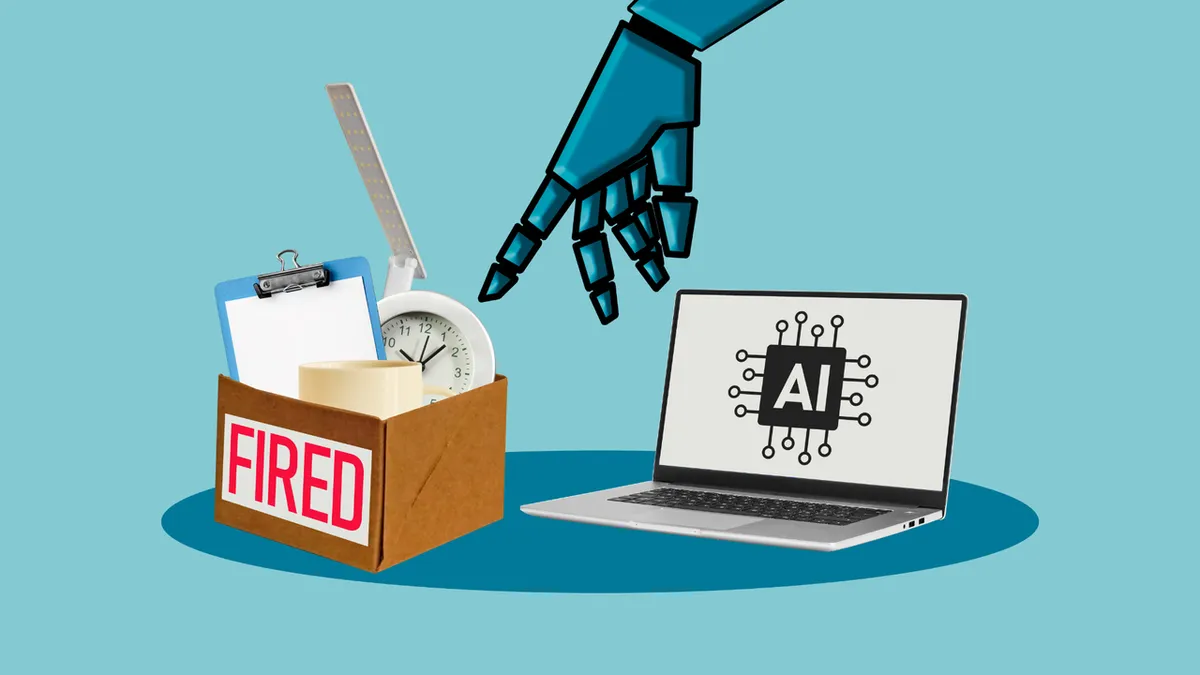
Remember when getting quietly pushed out of your job was subtle? A shrinking role here, a restructured team there, a manager who suddenly stopped returning your Slack messages? Cozy times. According to a Fast Company analysis, we have officially graduated from the sneaky era of silent firing into something far less ambiguous.
The pattern everyone ignored
Back in October 2024, the warning was already on the wall: tech companies weren't eliminating jobs overnight, they were slowly reshaping roles in ways that made people want to leave on their own. Quiet, deniable, spreadsheet-friendly. Companies were essentially setting up an automation runway and gently nudging human workers toward the exit ramp while they paved it.
That was a warning. Now it reads like a forecast that aged disturbingly well.
Amazon just turned up the volume
Amazon's January 2026 announcement of 16,000 layoffs - roughly 10% of its corporate workforce - is the latest and loudest data point in this ongoing saga. Leadership has been careful, publicly at least, to frame these cuts in ways that keep the word "automation" at arm's length. But when you zoom out and look at the broader pattern across the tech industry, the story tells itself.
This isn't a one-company panic. It's a choreographed transition that's been rehearsed quietly for years, and we're now watching the main performance.
Why this matters more than the numbers
Here's the thing about 16,000 jobs: it's a big, alarming number that will dominate headlines for a week and then get buried under the next earnings call. But the real story isn't the headline figure - it's the infrastructure being built around the absence of those roles. When jobs disappear and aren't replaced with equivalent human positions, that's not restructuring. That's a directional statement about what companies think the future workforce looks like.
And spoiler: it doesn't look like you refreshing your inbox waiting for a meeting invite.
So what do you do with this information?
Panic is inefficient and bad for your skin. But so is pretending this is a temporary blip. The smarter move is to start reading the room at your own company - not with paranoia, but with clear eyes. Are roles being consolidated? Are new hires skewing toward AI-adjacent titles? Is your job description quietly expanding to cover things three people used to do?
Silent firing may have gotten louder, but the underlying logic hasn't changed. The companies that were subtly clearing the decks in 2024 are now just being more honest about it. Which, in a grim sort of way, is almost refreshing.