Good news, everyone! The people who work in AI are feeling pretty great about AI. If you are not one of those people - and statistically, you are not - you are apparently spiraling. A lot.
Stanford's annual AI Index report has dropped, and buried inside all the charts and benchmarks is a finding that is frankly more unsettling than any robot apocalypse scenario: there is a rapidly widening gap between how AI insiders perceive the technology and how the general public feels about it. Spoiler: one group is bullish, and the other group is quietly updating their resume and checking if their doctor can be replaced by a chatbot (answer: maybe, which is not helping).
The vibe gap is real and it is growing
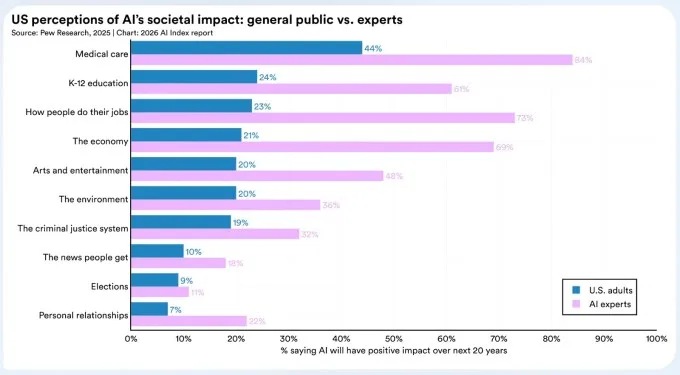
According to the Stanford report, highlighted by TechChrunch, public anxiety around AI is rising across several key areas - jobs, healthcare, and the broader economy. These are not niche concerns. These are the three things most people actually care about on a Tuesday morning while waiting for their coffee to brew.
Meanwhile, the AI insider crowd - researchers, developers, executives, the people who name their startups things like "Luminos" - tends to view the technology with considerably more optimism. Which makes a certain kind of sense. If you are building the wave, it probably feels less like drowning.
Why this disconnect actually matters
Here is the thing: this is not just a fun "two worlds" story for think pieces. When the people designing these systems and the people living with the consequences of those systems are operating from completely different emotional realities, that is a governance problem waiting to happen.
Public trust in technology does not just evaporate quietly. It curdles into backlash, bad policy, and a general vibe of "we told you so" that nobody actually enjoys being right about. The history of tech is full of industries that got so deep into their own enthusiasm that they forgot to bring the public along - and paid for it later.
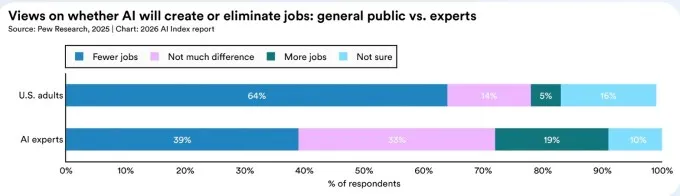
AI anxiety about jobs is not irrational panic either. Automation has reshaped labor markets before, and the speed at which AI tools are moving into healthcare, legal, and creative industries is genuinely unprecedented. Being nervous about that is not a failure of imagination. It is pattern recognition.
So what do we do with this?
The Stanford AI Index is not a doom report - it is a temperature check. And right now, the temperature inside the AI industry and the temperature outside of it are two very different readings. Someone is going to have to open a window.
Until then, the rest of us will keep side-eyeing the chatbot our HR department just rolled out and wondering if it knows something we do not.