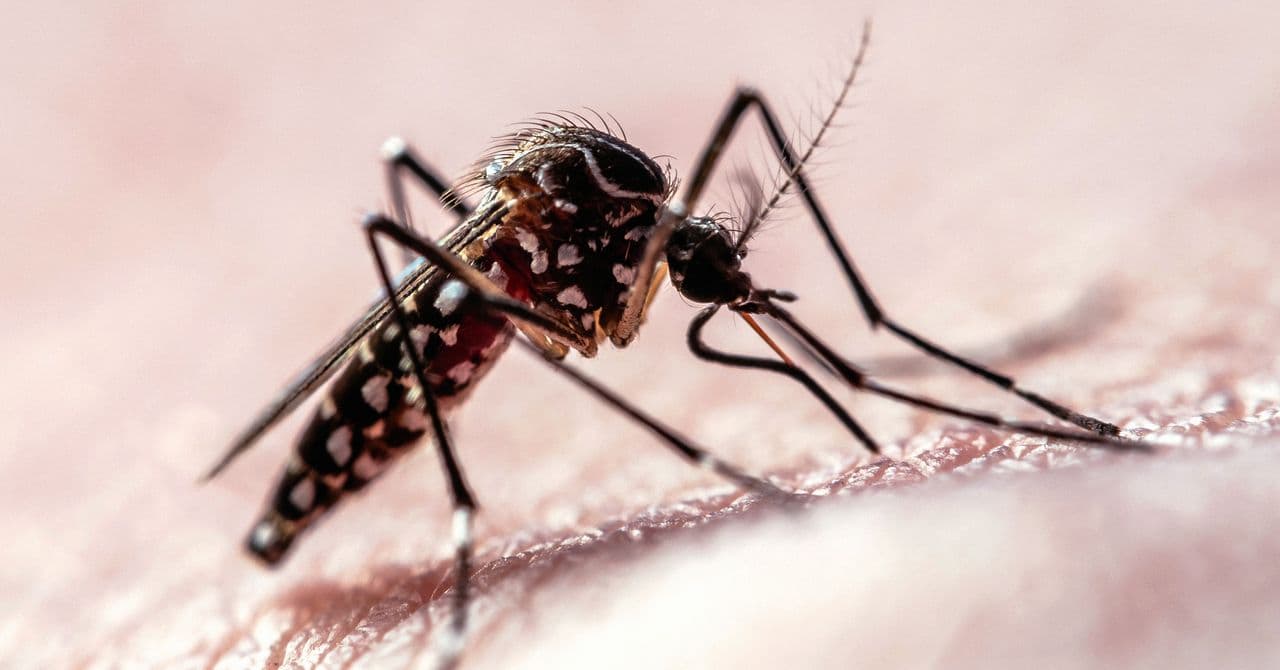
You're sitting outside on a warm evening, and somehow, out of everyone at the table, the mosquitoes find you first. It feels personal. And according to new research, it kind of is - mosquitoes follow a remarkably deliberate, multi-step process to lock onto human targets, and scientists have now mapped that process in precise detail.
Researchers have used flight path data to quantify exactly what draws mosquitoes toward people, tracking how these insects navigate toward a host. The findings, reported by Wired, reveal that mosquitoes don't just stumble onto you by accident. They follow a sequence of cues - picking up on carbon dioxide, body heat, and other signals in a layered way that helps them zero in with surprising accuracy.
Why this matters beyond your backyard
This isn't just fascinating dinner-party trivia (though it absolutely is that). Mosquitoes are among the deadliest animals on the planet, responsible for transmitting diseases like malaria, dengue fever, and Zika virus that kill hundreds of thousands of people every year. Understanding the mechanics of how they find humans is a critical step toward disrupting that process.
The practical payoff here is significant. By knowing exactly which signals mosquitoes respond to - and in what order - researchers can design smarter, more effective traps. Instead of broadly mimicking a human presence, future traps could be engineered to hit those specific cues in sequence, making them far more attractive to mosquitoes and far more effective at pulling them away from people.
The bigger picture for pest control
Current mosquito control methods - sprays, nets, generic traps - are imperfect and often environmentally blunt. A trap built on precise behavioral data could be a game-changer, especially in regions where mosquito-borne illness is a daily public health crisis rather than a seasonal nuisance.
There's also something almost poetic about turning the mosquito's own finely tuned hunting instincts against it. The better we understand what makes us irresistible to them, the better our chances of becoming invisible.
So yes, the next time you're being eaten alive at a summer barbecue, know that science is working on it - and that your suffering is, in a small way, contributing to a genuinely important body of knowledge.