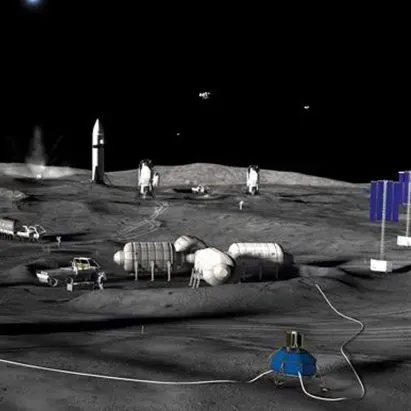
NASA has officially updated its plans for a permanent moon base, and the timeline is closer than you think. The agency released a multi-phased roadmap this week that ends with what they're calling "semi-permanent habitation models" - which is NASA-speak for "yes, actual humans will be living up there."
According to Dezeen, the agency confirmed that "living and working on the moon will become reality" after 2032. Six years, people. That's roughly the same amount of time it takes to pay off a mid-range car, and somehow also the window in which humanity decides to colonize Earth's only natural satellite.
Wait, what happened to the space station plan?
Glad you asked. Back in March, NASA quietly ditched the idea of building an orbital space station in favor of going full boots-on-the-ground with a lunar base. This decision came after the successful Artemis II mission, which apparently went well enough that the agency felt confident enough to skip the "floating tin can in orbit" phase and jump straight to "we're building a neighborhood on the moon."
Bold move. We respect it.
So what does "semi-permanent habitation" actually mean?
The phrasing is doing a lot of heavy lifting here. "Semi-permanent" suggests this isn't going to be a crash pad for a weekend astronaut retreat - we're talking sustained human presence, infrastructure, and presumably some very creative solutions to the whole "no atmosphere" problem.
The plan rolls out in phases, which is either reassuring project management or the kind of thing that sounds great in a PowerPoint and then runs 15 years over schedule. History suggests both are possible.
Why this actually matters
Here's the thing - a permanent moon base isn't just a flex for the space nerds (though it absolutely is that too). It represents a genuine shift in how humanity thinks about where it can exist. The moon is essentially a launchpad for deeper space missions, a potential resource hub, and a giant test for whether we can sustain life somewhere that actively wants to kill us.
If NASA pulls this off anywhere near the 2032 timeline, it would be one of the most significant things humans have ever done. Full stop.
And if not - well, at least the moon will always be up there, looking smug about it.