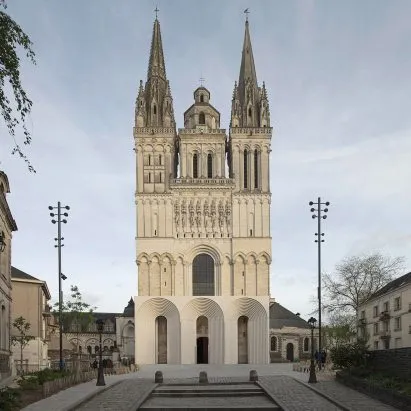
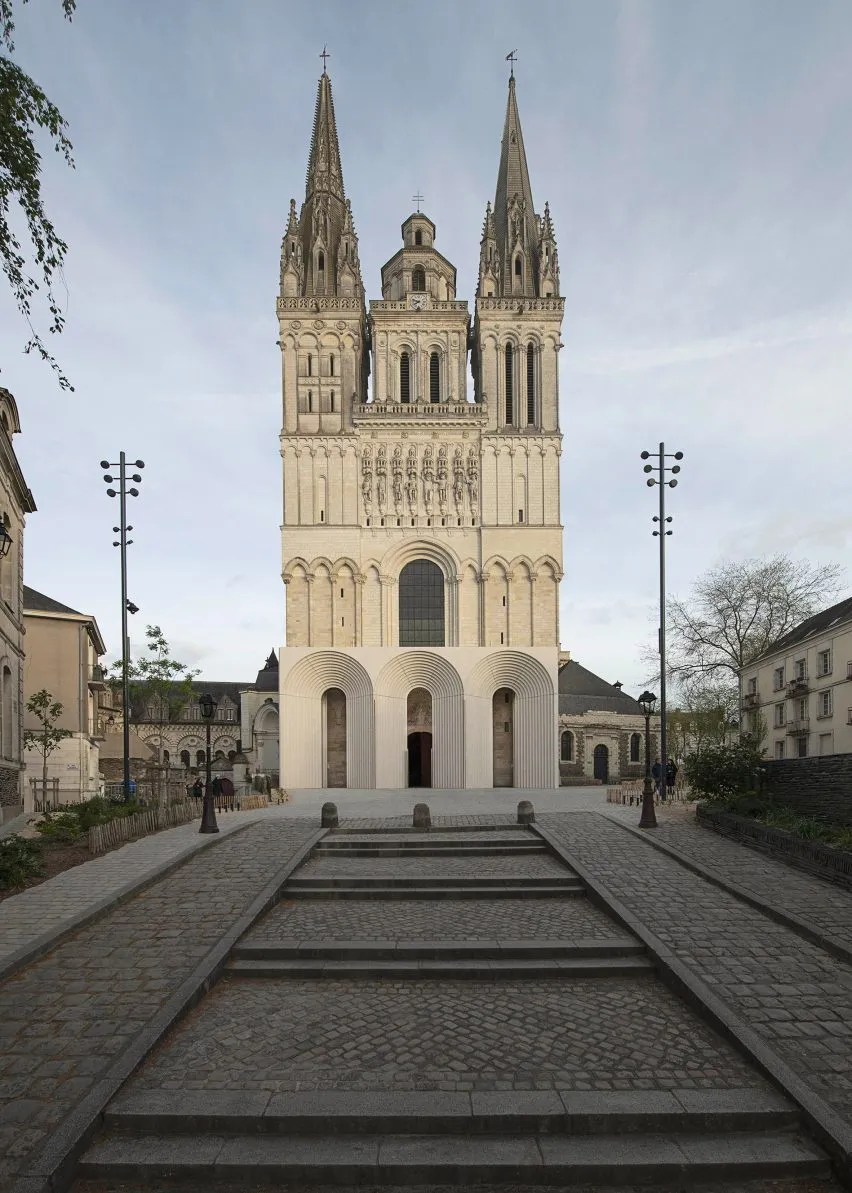
There's something quietly radical about placing a work of contemporary architecture directly in front of a centuries-old cathedral - and making it feel right. That's exactly what Kengo Kuma's studio has pulled off in Angers, France, where a new concrete entrance to Angers Cathedral opened earlier this month.
A gateway between old and new
The addition sits on the west side of the Angevin Gothic-style cathedral, functioning as both a practical entrance and a protective gallery for the existing sculptural doorway behind it. It's a dual purpose that shapes everything about the design - this isn't decoration, it's architecture doing real work.
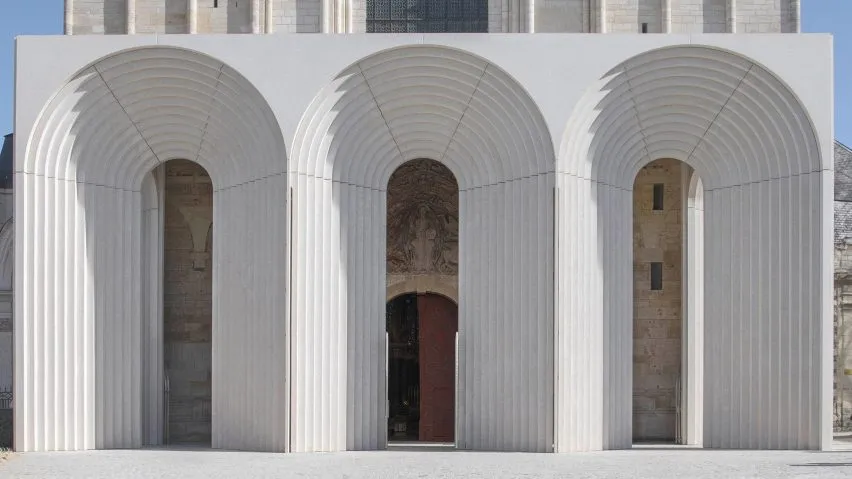
The structure takes a rectangular form, but what stops it from feeling boxy or severe are five arched openings that punctuate the facade. Those arches are doing a lot of heavy lifting here. They echo the Gothic vocabulary of the cathedral itself without mimicking it, creating a conversation between the medieval stonework and the new concrete rather than a competition.
Why Kengo Kuma was the right call
Kuma has built a reputation for designing buildings that respond sensitively to their surroundings, often using materials and forms that feel rooted in a place even when they're clearly contemporary. His work tends to avoid the trap of either blending in too timidly or showing off too aggressively - a balance that's genuinely hard to strike, especially when your neighbor is a Gothic cathedral that's been standing for hundreds of years.
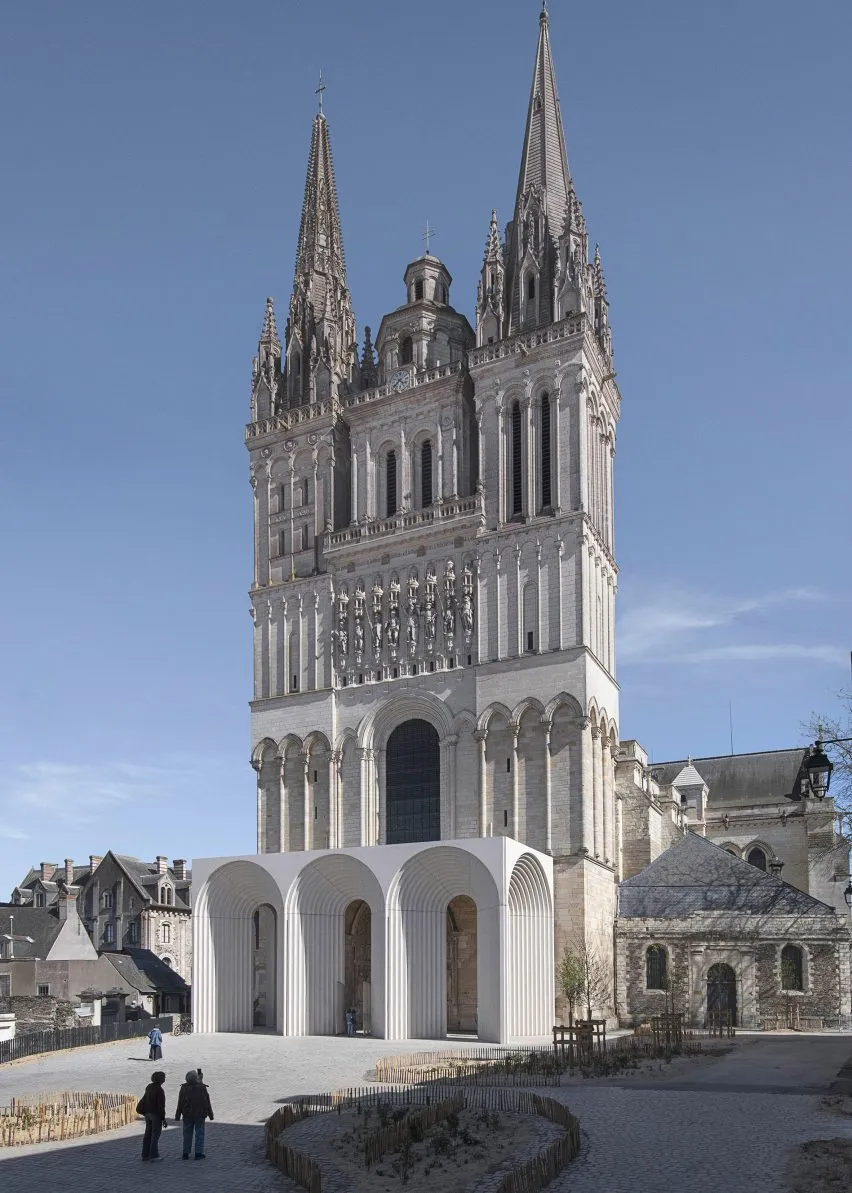
The choice of concrete might raise an eyebrow at first - it's not exactly the most romantic material. But concrete, handled well, has a weight and solidity that can hold its own next to historic masonry. It's a material that says permanence, which matters when you're adding to something that's already lasted centuries.
More than a facade
What makes this project particularly interesting is its function as a gallery space. Visitors don't just pass through - the entrance invites a slower kind of looking, framing the original sculptural doorway as something worth pausing to notice. It recontextualizes a feature that many visitors might otherwise walk straight past.
Projects like this one, reported by Dezeen, remind us that good architecture isn't always about dramatic new buildings rising on empty plots. Sometimes the most thoughtful design work happens right at the intersection of old and new - where someone has to make a careful, considered decision about how the present speaks to the past.