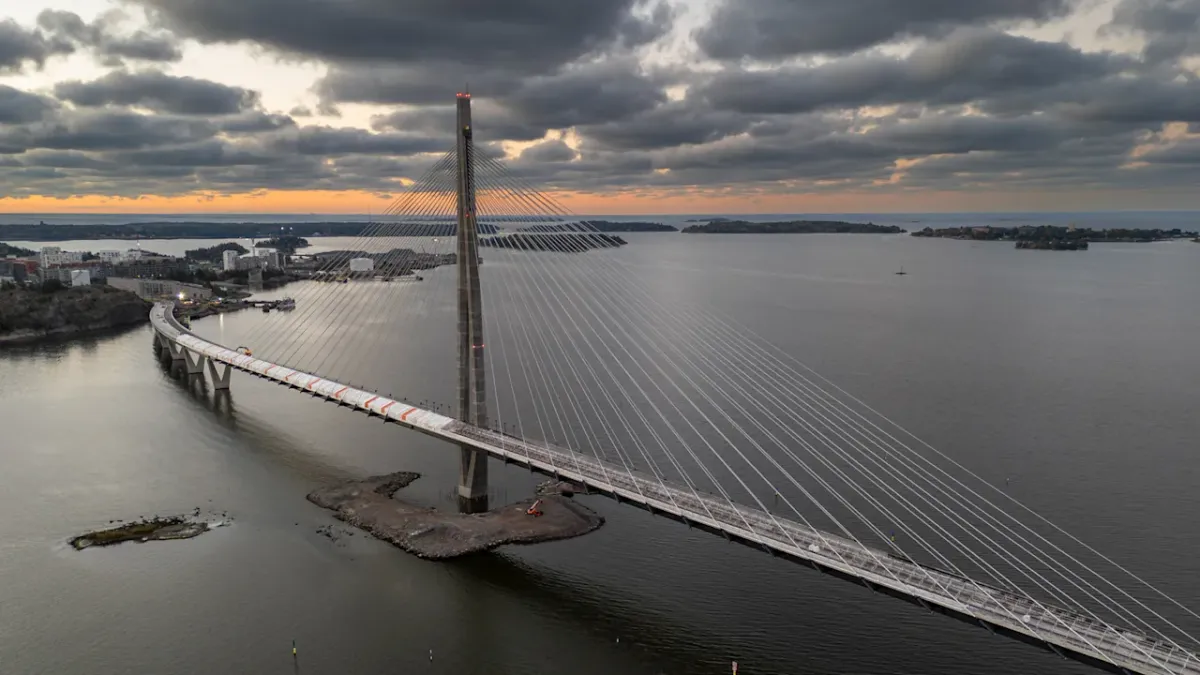
If you needed a sign that cities are getting serious about car-free living, Helsinki just delivered a pretty literal one. A brand new 1.2-kilometer bridge connecting the island of Laajasalo to the city center opened this April - and drivers aren't invited.
The bridge, part of Helsinki's expanding bicycle superhighway network, is designed exclusively for cyclists, pedestrians, and trams. Anyone behind the wheel of a car has to take a longer detour over an older bridge nearby. It's a bold move, and it's not an accident - it's urban planning with a point of view.
A neighborhood built around not owning a car
The bridge is one piece of a much bigger picture. Laajasalo is being developed as a district where car ownership is essentially optional - by design rather than by inconvenience. That's a meaningful distinction. Rather than simply making driving harder, the goal is to make not driving genuinely easy and appealing.
The crossing opened to cyclists and pedestrians on April 18, with tram service set to follow. When the tram connection is live, residents will have a fast, direct route into the city center without needing to sit in traffic or hunt for parking.
Why this matters beyond Helsinki
It's easy to look at a project like this and think "that's very Scandinavian" and move on. But what's happening in Helsinki reflects a broader shift in how forward-thinking cities are approaching infrastructure spending. Instead of building more lanes and more parking, the investment is going into networks that make human-powered and public transit the path of least resistance.
Bicycle superhighways - dedicated, high-quality cycling routes designed for speed and comfort rather than just recreation - are gaining traction across Europe. Helsinki's growing network is a strong example of how these routes can anchor entire neighborhoods, not just connect a few parks.
For anyone who has ever wished they could ditch their car but felt like the city just wasn't built for it, Laajasalo is a glimpse of what "built for it" could actually look like. A bridge that physically prioritizes bikes and trams over cars isn't just infrastructure - it's a statement about what kind of city Helsinki wants to be.
According to Fast Company, the island also has a former industrial area being transformed as part of the wider development, adding to the sense that this is a district being reimagined from the ground up rather than retrofitted around existing car culture.