Imagine delegating your most tedious work tasks - the copy-pasting, the research rabbit holes, the repetitive data entry - to your browser. That's essentially what Google is pitching with its latest update to Chrome for enterprise users.
According to TechCrunch, Google is rolling out Gemini-powered 'auto browse' capabilities to Chrome in the workplace. The feature lets the browser act more like an intelligent assistant than a passive window to the web, handling tasks like research, data entry, and other workflow staples that tend to eat up a surprisingly large chunk of the workday.
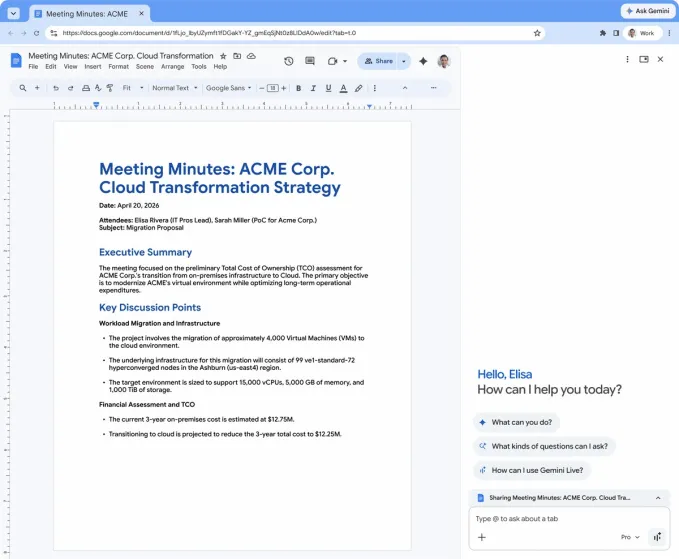
What this actually looks like in practice
Think of it less like a chatbot you type questions into and more like a capable coworker who can take over a specific task while you focus on something else. Rather than jumping between tabs and manually pulling information together, Chrome would be able to navigate, gather, and process that information on your behalf.
For enterprise environments - where workers often deal with repetitive browser-based workflows - this kind of automation has real appeal. Data entry alone is one of those invisible time drains that rarely shows up in job descriptions but absolutely shows up in how the day feels.

Why this matters beyond the office
Google positioning Chrome as a workplace tool, rather than just a browsing tool, signals a broader shift in how tech companies are thinking about productivity software. The browser is where most modern knowledge work actually happens. Email, documents, spreadsheets, project management - so much of it lives in tabs. Making the browser smarter rather than building yet another standalone app is a genuinely practical approach.
It also puts Google in more direct competition with AI-powered productivity tools that have been quietly gaining ground in enterprise settings. If Chrome can absorb some of that functionality natively, there's less reason for companies to layer on additional software.
The catch, as always
Automation that touches workplace data comes with questions - about privacy, about accuracy, about who's accountable when the AI does something wrong. Enterprise rollouts typically come with more controls than consumer products, but it's worth watching how Google handles those guardrails as this feature becomes more widely available.
For now, the Gemini-powered auto browse feature is aimed at enterprise Chrome users, so your personal browser isn't about to start filing your expense reports just yet. But the direction of travel is pretty clear: your browser is becoming a lot more than a place to open too many tabs.