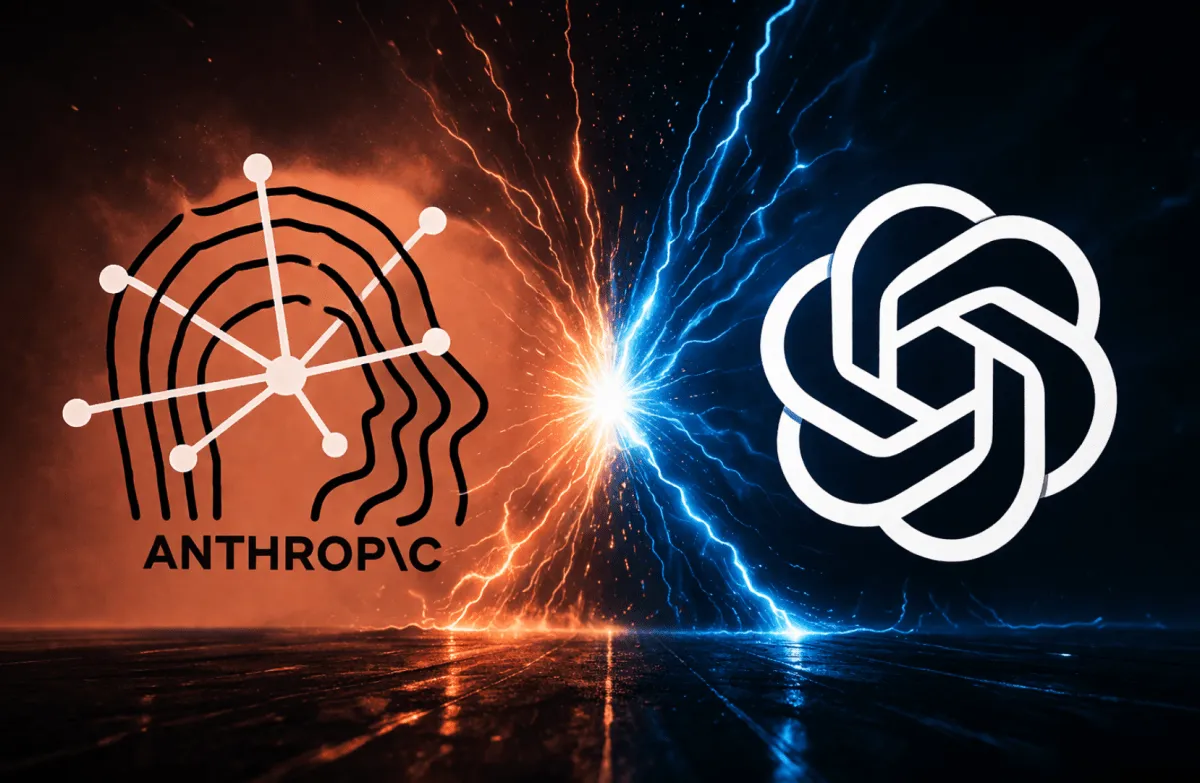
The AI investment landscape is shifting in ways that would have seemed unlikely just a year ago. According to reporting by the Financial Times, cited by TechCrunch, some investors who have backed both OpenAI and Anthropic are quietly reassessing which company represents the better long-term bet - and the math is starting to favor the underdog.
The valuation problem
Here's the core tension: one investor who has put money into both companies told the FT that justifying OpenAI's most recent funding round required assuming an IPO valuation of $1.2 trillion or higher. That's an enormous number to swallow, even in a sector known for its eye-watering price tags.
Anthropic, by contrast, is currently valued at around $380 billion. In almost any other context, that figure would sound absurdly large. But sitting next to the $1.2 trillion threshold needed to make OpenAI's valuation pencil out, it suddenly looks almost... reasonable.
Why this matters beyond the spreadsheets
Investor sentiment shifting around AI companies isn't just a story for finance nerds. These valuations shape which companies get the resources to hire top talent, build infrastructure, and ultimately determine whose AI tools the rest of us end up using.
If capital starts flowing more enthusiastically toward Anthropic, that has real implications for the competitive balance between the two firms - and for the broader AI ecosystem. More funding means faster development, more product launches, and more influence over where the technology goes next.
Anthropic, the company behind the Claude family of AI assistants, has positioned itself partly on a safety-focused identity. OpenAI, despite its origins as a nonprofit research lab, has leaned harder into rapid commercialization under its ChatGPT brand. Whether those philosophical differences actually translate into meaningfully different products is a live debate - but investors are increasingly treating them as distinct opportunities with distinct risk profiles.

The bigger picture
What's interesting here isn't just that one company looks cheaper than another. It's that even sophisticated, well-connected investors are grappling with the same fundamental uncertainty the rest of us feel about AI: nobody really knows how big this gets, how fast, or who ends up on top.
When a $380 billion valuation is the conservative option in the room, you know we're in genuinely uncharted territory. Whether that's exciting or alarming probably depends on how much of your portfolio is riding on the answer.