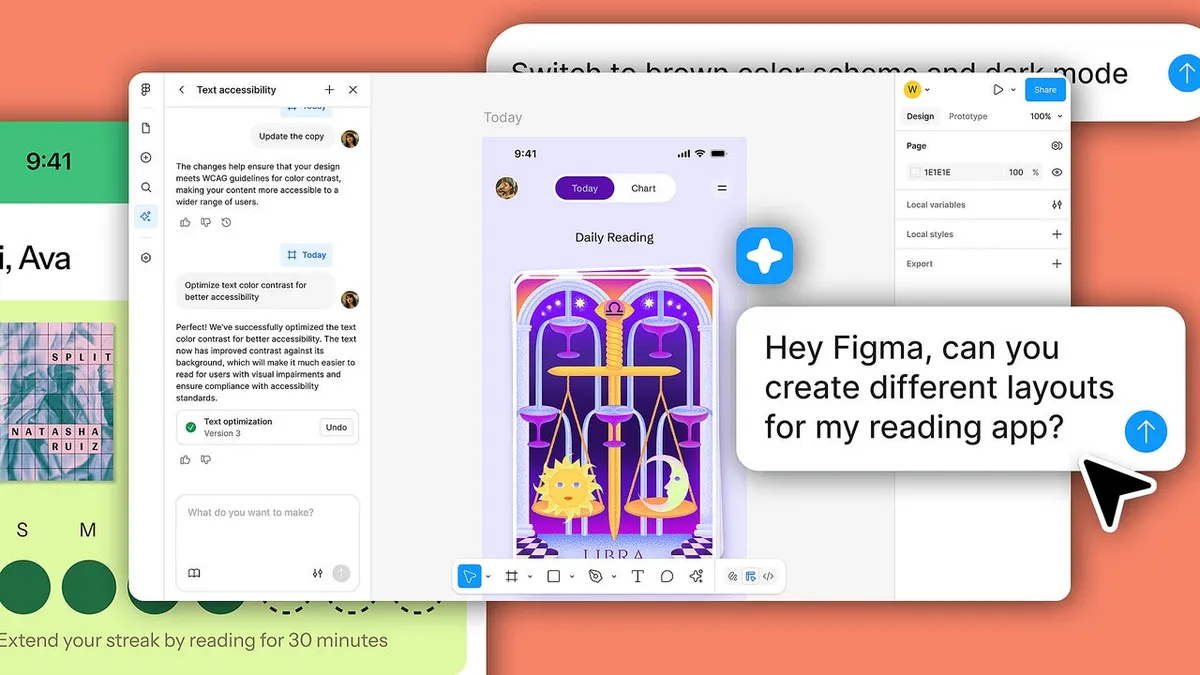
Figma has announced something that every designer who has ever spent 40 minutes nudging a button two pixels to the left will want to hear about. The company just dropped a native AI agent built directly into its collaborative design environment - no awkward sidebars, no disconnected prompt windows, no copy-pasting between tools like it's 2019.
According to Fast Company, the system plants multiple digital assistants right on your actual canvas. We're talking about help that lives where the work happens, not in some detached AI chatbox you have to context-switch to every five minutes.
What does it actually do?
The short version: it generates interface elements and handles the repetitive, soul-crushing pixel work that makes designers question their career choices at 11pm on a Tuesday. The goal, per Figma, is to keep you in your creative flow state rather than yanking you out of it every time you need to spin up a basic component.
Think of it less like a robot taking your job and more like having an extremely fast junior designer who doesn't need onboarding, never eats your lunch from the fridge, and won't ask you to explain what a design system is for the fourth time.
Why this is a bigger deal than it sounds
The really interesting part here isn't the AI itself - it's where Figma chose to put it. Baking intelligence directly into the collaborative canvas is a fundamentally different bet than bolting an AI feature onto the side of existing software. It suggests Figma is rethinking what a design tool even is, not just adding a checkbox feature to keep up with the hype cycle.
Every other tool right now is doing the floating-prompt-box thing. Figma is apparently trying to make AI feel less like an interruption and more like part of the actual work surface. Whether that lands in practice remains to be seen, but the instinct is right.
Designers have been promised AI salvation before, of course. But this one is worth watching - because if Figma can actually keep creators in flow while offloading the boring stuff, that's not just a feature. That's a pretty meaningful shift in how design work gets done.
Now if it could also attend the stakeholder feedback calls, we'd really be cooking.