Public pools have a reputation problem. You know the one - cracked concrete, questionable water color, a vending machine that only takes exact change, and approximately zero shade for your suffering body. Baltimore said "enough of that" and redesigned the whole concept from scratch.
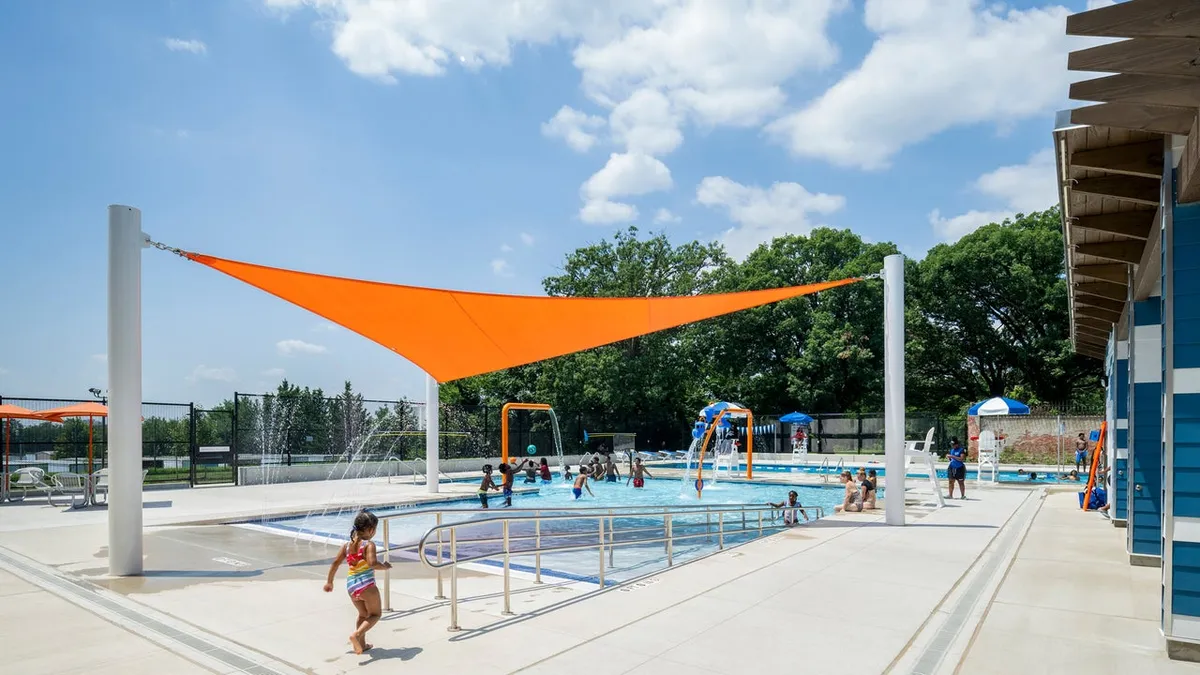
The newly renovated Greater Model Aquatics Center in Poppleton, West Baltimore, opened in mid-June, and honestly it sounds less like a city pool and more like the kind of place people book vacations around. According to Fast Company, the facility features a zero-entry wading pool that slopes gently into the water like a natural shoreline - so no scary ledge, no metal ladder, just a civilized way to ease yourself into the experience.
What actually makes this pool different
Beyond the genius zero-entry design (which is genuinely more welcoming for kids, older adults, and people with mobility concerns), the complex includes a proper six-lane lap pool for the serious swimmers among us. But here's where Baltimore really understood the assignment: the deck is furnished with bright yellow lounge chairs, shade umbrellas, and a splash pad.
Yellow. Lounge. Chairs. At a public pool. This is not a drill.
A new rec building with public restrooms rounds out the whole setup - because apparently Baltimore remembered that humans have basic needs and designed for those too. Revolutionary stuff.
Why this matters more than it sounds
This isn't just a fun news story about a nice pool. Access to quality public recreational spaces is deeply tied to neighborhood investment and community health. Poppleton is a West Baltimore neighborhood that has seen its share of disinvestment over the years, and a facility like this signals something real - that the people who live there deserve infrastructure that's actually pleasant to use.
The zero-entry design in particular is a quiet masterstroke. It removes a physical barrier that quietly excludes a huge chunk of the population from what should be a universally accessible space. When a public pool is genuinely welcoming - not just technically open to the public - more people actually show up. And more people showing up to a shared space is exactly how communities work.
Designed by CannonDesign, the Greater Model Aquatics Center is the kind of project that should make other cities deeply uncomfortable about their own aging, underinvested public pools. In the best possible way.
Baltimore figured out the secret. Now the rest of us have to explain why our municipal pools still look like it's 1987.