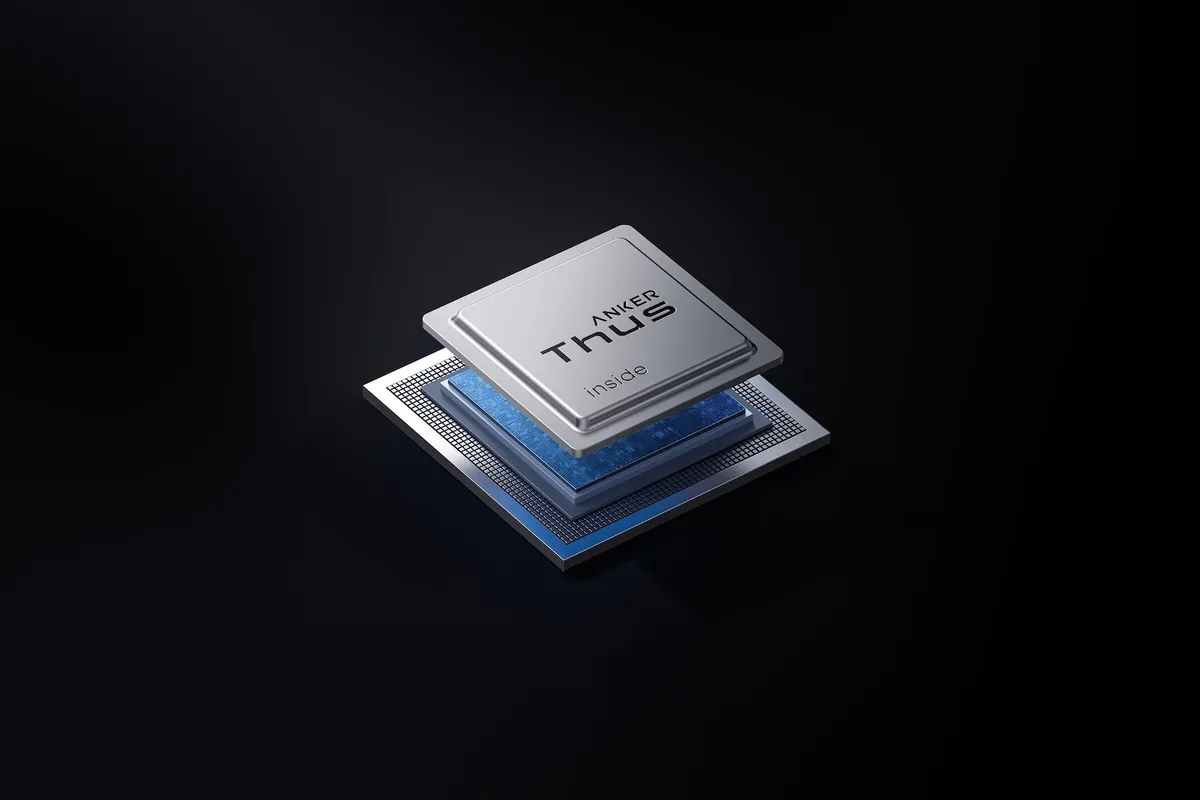
Anker - best known for the chargers and cables cluttering your desk drawer - just made a surprisingly bold move into custom silicon. The company has announced its own AI chip called Thus, and if the pitch holds up, it could quietly reshape what we expect from small, everyday tech.
The Thus processor is being described as the world's first neural-net compute-in-memory AI audio chip. That's a mouthful, but the key idea is elegant: instead of storing an AI model in one place and doing calculations in another (the way traditional chips work), Thus handles both in the same place. According to Anker CEO Steven Yang, that fundamental change is what makes Thus different from every AI chip built before it.

Why the chip design actually matters
The practical payoff of this architecture is twofold - smaller size and lower power consumption. Both of those things are a big deal when you're trying to stuff intelligence into something the size of an earbud or a compact IoT sensor. Running complex AI computations normally drains batteries fast and demands serious hardware real estate. Thus is designed to sidestep both problems.
Anker says the chip will enable local AI processing across audio devices, mobile accessories, and IoT products. Local processing is worth paying attention to here - it means the AI runs on the device itself rather than bouncing your data off a remote server. That has real implications for privacy, speed, and reliability, especially in situations where you don't have a strong connection.
What this could look like in practice
Imagine noise cancellation that learns your environment and adapts in real time, or a smart home device that responds instantly without waiting on the cloud. Anker hasn't spelled out exactly which products will get the Thus treatment first, but the chip's intended range - audio, accessories, IoT - suggests it's thinking broadly.
For a company that built its reputation on affordable, reliable hardware rather than cutting-edge innovation, this is a meaningful shift. Developing custom silicon is expensive and technically demanding. It's the kind of move you see from Apple or Qualcomm, not the brand you grabbed off Amazon for a last-minute gift.

Whether Thus delivers on its promise remains to be seen, but the direction is clear: Anker wants AI to be a standard feature across its lineup, not a premium add-on. Given how many of their products already live in people's homes and pockets, that's worth watching closely.
Source: The Verge