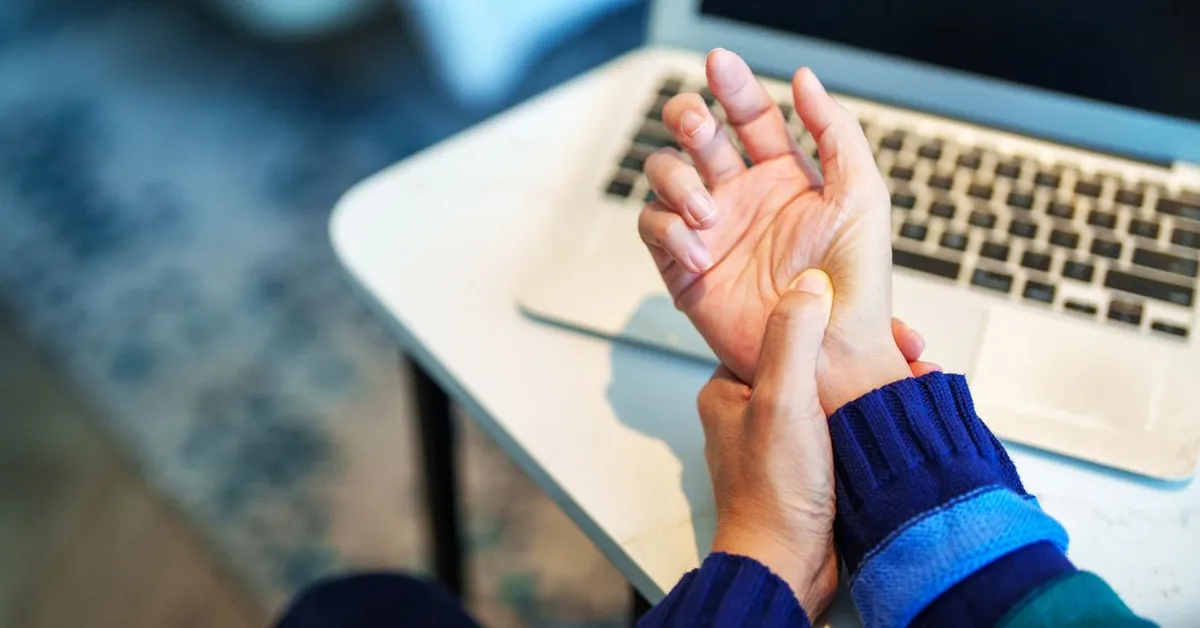
If you've ever had the misfortune of slicing into your hand while aggressively halving an avocado - and statistically, someone reading this absolutely has - you'll know that nerve damage is no joke. Nerves heal slowly, badly, and often incompletely. A French startup thinks they've found a smarter way to fix that, and it involves special polymers and blue light, which sounds like something out of a low-budget sci-fi film but is apparently very real science.
So what's actually going on here?
According to Wired, the startup has developed a biodegradable material designed to act as a kind of scaffolding for damaged nerves after surgery. The idea is that instead of leaving your severed nerve endings to figure things out for themselves like lost tourists in a foreign city, you give them a structured path to follow. The material guides regrowth, then breaks down naturally once it's done its job. No removal surgery required. Very tidy.

The blue light element activates the polymer, helping it bond and set in place during the procedure. It's a bit like UV curing for your insides, which is either deeply cool or deeply unsettling depending on your relationship with medical procedures.

Why this actually matters
Nerve repair is one of medicine's genuinely frustrating frontiers. Unlike bone or skin, nerves don't bounce back reliably. Patients dealing with peripheral nerve injuries - whether from surgery, accidents, or that ill-fated avocado incident - often face months of rehabilitation with incomplete results. Better materials that actively support healing rather than just getting out of the way could meaningfully change outcomes for a lot of people.
The biodegradable angle is also worth flagging. Traditional nerve conduits can sometimes require follow-up procedures to remove them. A material that does its job and then quietly disappears is a genuine quality-of-life upgrade for patients, not just a fun headline.
Where things stand
The startup is still in the development and testing phase, so don't expect this to show up at your local hospital next Tuesday. But the underlying approach - using smart biomaterials to guide tissue regeneration - is a field that's been gaining serious traction, and having a dedicated team specifically focused on nerve repair applications is the kind of specialization that tends to move things forward faster.
In the meantime, maybe just buy pre-sliced avocado. Your nerves will thank you.