If you've ever tried to renovate a rental apartment and had your landlord shut it down, congratulations - you now have something in common with the President of the United States.
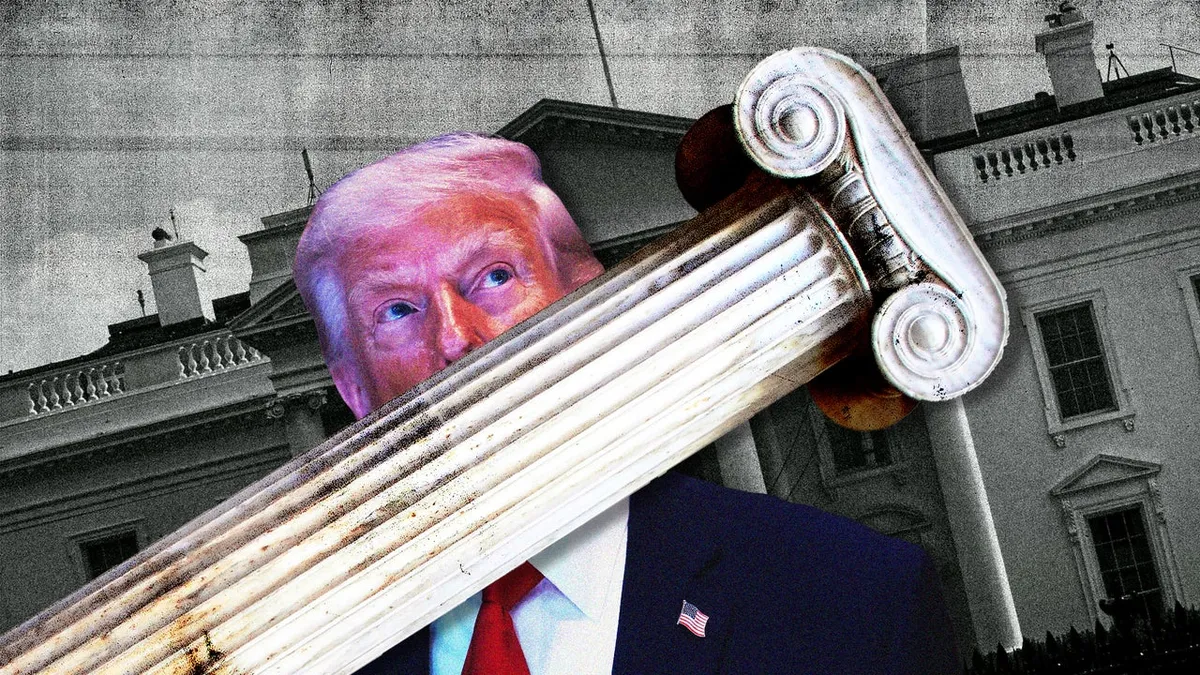
On March 31, 2026, U.S. District Court Judge Richard Leon put the brakes on Donald Trump's White House ballroom construction plans, reminding everyone in the most legally precise way possible that the president is the steward of the White House, not its owner. Which, when you think about it, is a pretty extraordinary thing to have to tell a sitting president in a formal court order.
The chaos that followed
The Justice Department, apparently not thrilled about a half-finished construction site sitting inside one of the most secure buildings on the planet, filed an emergency motion asking that work be allowed to resume. Their argument: a project frozen mid-renovation creates security risks. Which, fair enough - nobody wants load-bearing scaffolding in the East Wing becoming a geopolitical incident.
But here's where it gets genuinely interesting, beyond the political drama and the headlines.
The original design philosophy is kind of the real story
As Fast Company points out, American federal architecture was never supposed to look like this kind of thing. The founding idea - going back to the earliest days of the republic - was something closer to "republican simplicity." The visual language of American civic buildings was meant to communicate restraint, democratic values, and the idea that no one person owns the institution.
That's a long way from ballrooms and gold fixtures.
Most world leaders live in official residences that are, bluntly, more opulent by default - palaces built for monarchs, inherited by democracies. The White House, by contrast, has always occupied this weird middle ground: grand enough to project power, but theoretically humble enough to reflect the republic it represents.
Why this actually matters
The fight over this ballroom isn't really about a ballroom. It's about who gets to define what America's most symbolic address looks like - and what that symbolism says about the people living in it.
Every president redecorates. Every president puts their stamp on the place. But there's a spectrum between "new curtains in the Oval Office" and "structural construction that requires a federal court order to pause."
The judge's framing - steward, not owner - is doing a lot of heavy lifting here. It's a reminder that the White House belongs to the American public in a way that's more than just rhetorical. And apparently, sometimes that reminder needs to come with a court filing attached.
The construction remains paused. The ballroom remains unfinished. And somewhere, a federal judge is probably very tired.