If you've ever fantasized about ditching everything and living in a tiny cabin surrounded by olive trees in Greece, first of all: same. Second of all: London architecture studio Kasawoo has basically done it, and it looks incredible.
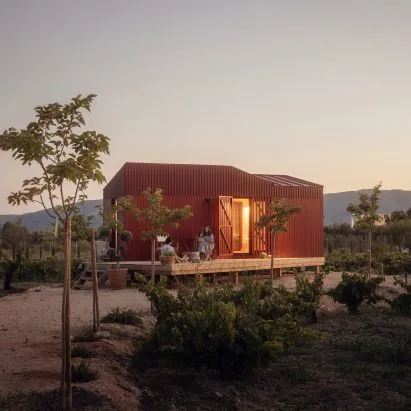
As reported by Dezeen, Kasawoo designed The Root - a compact, prefabricated holiday cabin on the Greek island of Zakynthos. The land belongs to the family of Kasawoo co-founder Katie Kasabalis, who has had roots there (yes, that's where the name comes from) for decades. The site also features the ruins of her family's original home, which gives the whole project a quietly emotional layer that no Instagram caption could ever fully capture.
Small but mighty - and very, very red
We're talking 20 square metres here. That's roughly the size of a large garden shed, except this one is clad in deep-red timber planks and sitting pretty among centuries-old olive groves. It's prefabricated, meaning it was built off-site and assembled on location, and it's designed to be fully relocatable. Basically, the dream of packing up your house and moving it somewhere better is no longer just a thing divorced dads say.
The design philosophy is refreshingly no-nonsense. Kasawoo's stated approach - "nothing is superfluous" - means every single element of the cabin earns its place. No decorative fluff, no performative sustainability features bolted on as an afterthought. Just thoughtful, stripped-back design that respects both the landscape and the people using it.
Why this actually matters
The Root isn't just a pretty architectural object to drool over on design blogs (although it absolutely is that). It represents something more interesting - the idea that holiday architecture doesn't have to be a bloated villa complex bulldozing local ecology. A 20-square-metre relocatable cabin leaves a genuinely light footprint. It sits within a family's existing land, responds to its surroundings, and doesn't pretend to be more than what it is.
There's also something deeply appealing about the personal dimension here. This isn't a developer-backed spec project chasing rental yields. It's a family story made physical, anchored to a specific place with real history. The ruins of the original house nearby make The Root feel less like a new building and more like a continuation of something.
Will this inspire a thousand copycat prefab cabins with forced "nothing is superfluous" taglines on their Airbnb listings? Probably. But the original is genuinely worth admiring.