If you've ever walked through Gion and thought "someone should really make a hotel that feels like all of this but with better plumbing," congratulations - Kengo Kuma heard you.
The Capella Kyoto, designed by the legendary Kengo Kuma and Associates, has opened in Kyoto's historic Gion district on the grounds of a former primary school. And yes, it's exactly as good as that sentence sounds.
So what makes this different from just another luxury hotel with some shoji screens?
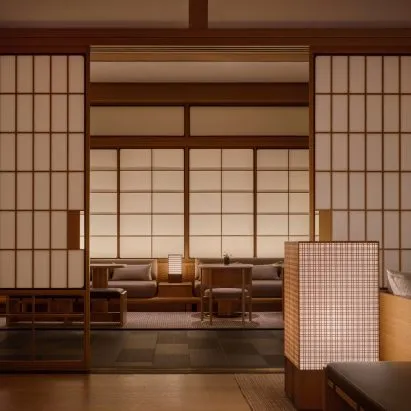
Everything, basically. According to Dezeen, the interiors were handled by Brewin Design Office, who took their cues from Kyoto's iconic machiya - the traditional wooden townhouses that give the city its unmistakable character. The design team specifically drew on the "rhythm and progression" of these structures, which is a very elegant way of saying they understood that Japanese architecture isn't just about how things look, it's about how you move through them.
Machiya are fascinating precisely because they're built on a logic of spatial unfolding - narrow street-facing facades that open up into deeper, layered interiors as you move through them. It's architecture as narrative. Bringing that sensibility into a contemporary luxury hotel is genuinely ambitious.
Why this actually matters
The Gion district is one of the most architecturally significant neighborhoods in Japan. It's also one of the most over-touristed. The choice to build on the grounds of an old school rather than bulldoze something irreplaceable, and to design something that converses with its surroundings rather than screaming "LOOK AT ME, I'M EXPENSIVE," is a meaningful one.
Kengo Kuma has built a career on exactly this kind of contextual sensitivity - using local materials and traditional building logic to make modern structures feel like they belong somewhere. His work on the 2020 Tokyo Olympic Stadium generated controversy, but nobody argues he doesn't know what he's doing with wood and space.
The verdict
The Capella Kyoto looks like the rare luxury hotel that earns its price tag not just through thread count and turndown service, but through genuine architectural thought. The machiya influence gives it a spatial identity that most hotels - even good ones - simply don't bother pursuing.
Whether you can afford to stay there or not, this is one worth following. Full details over at Dezeen.