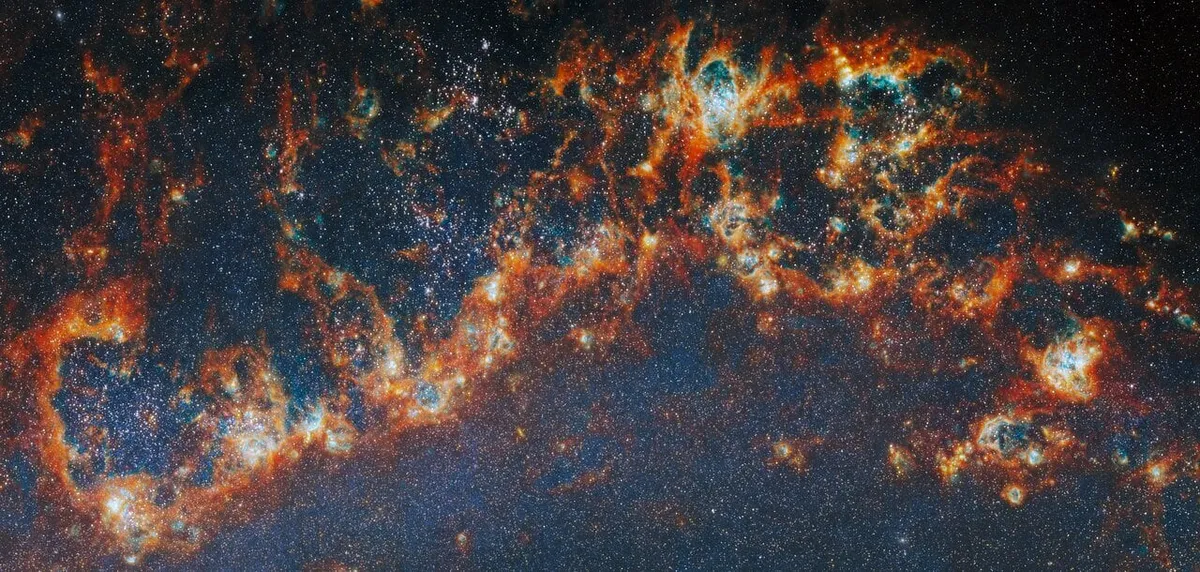
If you thought your morning routine was chaotic, spare a thought for newborn star clusters. New findings from NASA's James Webb Space Telescope and the Hubble Space Telescope have uncovered a fascinating pattern hiding inside thousands of stellar nurseries: the biggest baby star clusters clear out their birth clouds the fastest. Apparently, in space, size really does matter.
Born loud, gone fast
The research, reported by Mashable, reveals that massive newborn star clusters don't just sit quietly in their dusty cocoons. They blow through their surrounding gas and dust at an accelerated rate compared to their smaller, more modest cousins. Think of it like the difference between a toddler delicately eating cereal versus a golden retriever discovering an unguarded buffet. The bigger the cluster, the more violently it reshapes its own neighborhood.

This isn't just a fun cosmic quirk. Understanding how and when star clusters shed their birth material is crucial for figuring out how galaxies evolve over billions of years. The birth cloud isn't just packaging - it's the raw fuel supply. Once it's gone, it's gone, and the stars inside have to make do with what they've already got.
Why two telescopes are better than one
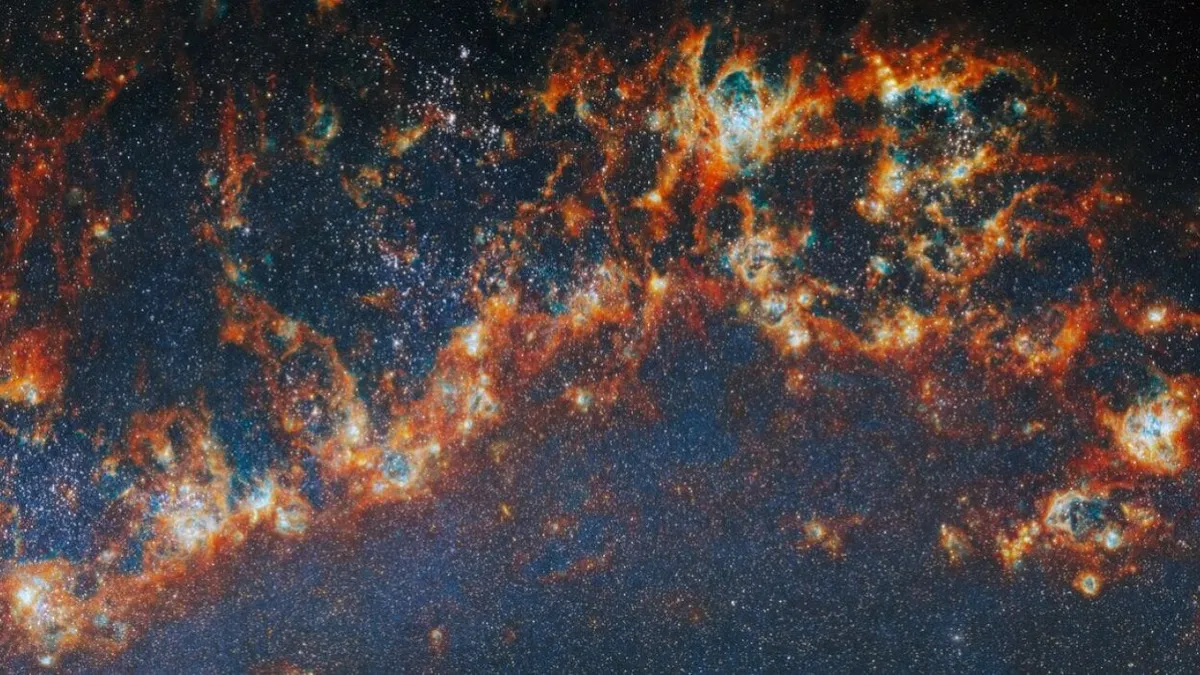
The fact that both Webb and Hubble were needed to crack this pattern is worth appreciating. Hubble sees the visible light universe we're more familiar with, while Webb cuts through dust with its infrared vision. Together they're essentially giving astronomers a cheat code to peer inside these stellar nurseries at different stages and wavelengths, building a timeline that neither instrument could have assembled alone.
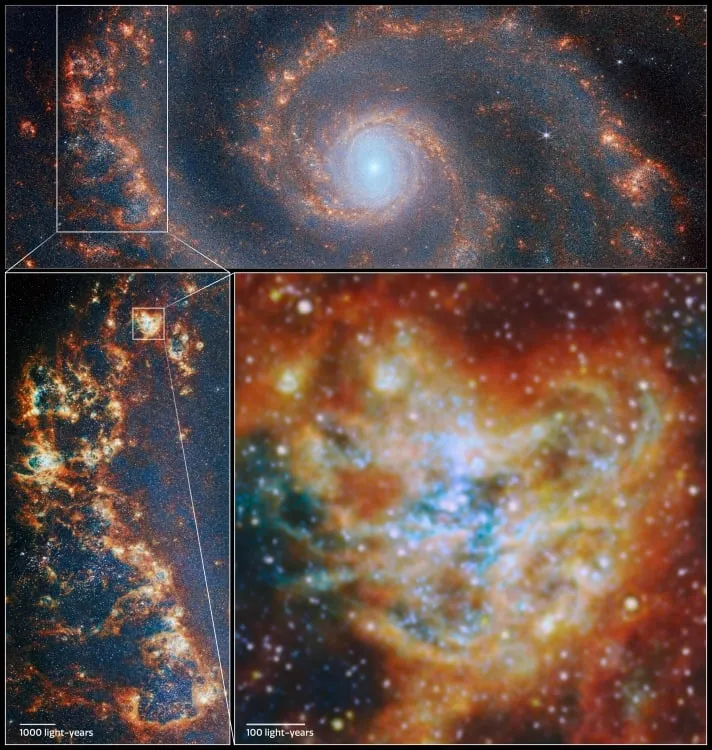
The sheer scale of the dataset makes this particularly exciting. Researchers weren't looking at a handful of clusters and making educated guesses - they were drawing patterns from thousands of examples. That's the kind of sample size that turns a curious hunch into something you can actually publish with confidence.
So what does this mean for us?
On a practical level, this helps scientists build better models of star formation across cosmic history. On a deeply satisfying nerd level, it confirms that the universe operates with a kind of internal logic - bigger stars throw bigger tantrums and clean up (or rather, explode out of) their rooms faster.
The universe is 13.8 billion years old and still finding new ways to be interesting. Not bad for something that started as a singularity with absolutely zero Twitter followers.