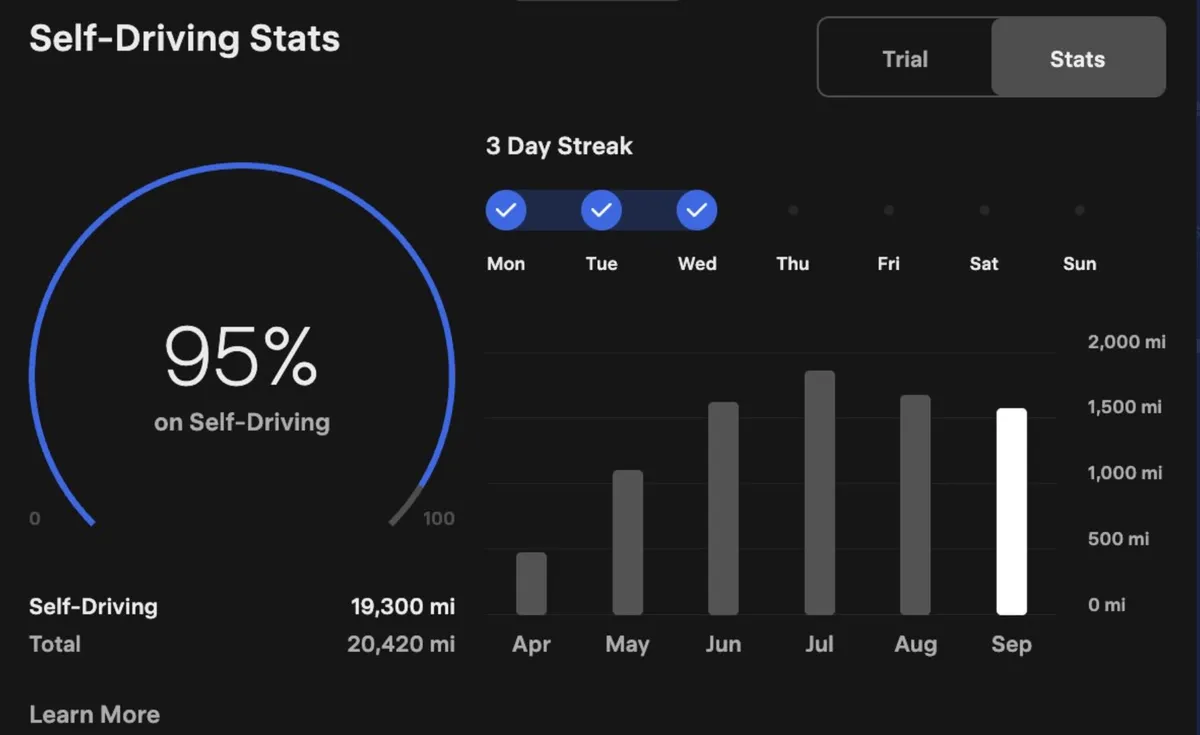
Tesla has quietly taken a page from the Duolingo playbook. The company has added streaks and usage statistics to its Full Self-Driving software, turning what was once a passive feature into something that nudges drivers to actually engage with it regularly, according to TechCrunch.
If you've ever paid for a gym membership and then rarely shown up, you understand the problem Tesla is trying to solve here. FSD is an advanced driver assistance system that costs real money - either as a purchase or a subscription - and a lot of owners simply weren't using it much. Adding streak tracking is a smart, low-friction way to change that behavior.
Why streaks work (and why Tesla knows it)
There's solid psychology behind habit-forming mechanics like streaks. When you can see a run of consecutive days doing something, you become motivated to protect it. Fitness apps, language learning platforms, and productivity tools have all leaned on this for years. Tesla bringing it into the car dashboard makes a certain amount of sense - especially when the goal is to get drivers comfortable enough with the technology that they'll keep paying for it.
The added usage stats give drivers a clearer picture of how often they're actually handing over control to the software, which could genuinely be useful. Knowing you've used FSD on 80% of your highway miles this month is the kind of data that builds confidence - and stickiness.
Making it easier to subscribe
Tesla has also reportedly streamlined the process of subscribing to FSD, removing some of the friction that previously made signing up feel like a hassle. That matters. In a world where you can sign up for almost anything in two taps, a clunky subscription flow can quietly kill conversion rates.
For Tesla, getting more drivers on FSD subscriptions is clearly a business priority. The company has been pushing the software as a key part of its future revenue model, and engagement metrics - like streaks - are a clever way to demonstrate value to users who might otherwise forget the feature exists between long trips.

The bigger picture
There's something interesting happening here beyond the feature update itself. Automakers are increasingly thinking like app developers, borrowing engagement tactics from the tech world to keep drivers connected to their vehicles' software ecosystems. Tesla has always blurred that line more than most, and moves like this suggest that direction is only going to deepen.
Whether or not you're a Tesla owner, the gamification of driving assistance is worth paying attention to. As these systems become more common across the industry, the way companies encourage adoption - and build habits around it - will shape how quickly autonomous driving actually becomes part of everyday life.